
Fast, Reliable New Detached ADU Across Chinatown
A new detached ADU in Chinatown typically runs $285,000-$410,000 all-in, drawings through final inspection, with the final number driven by seismic retrofit scope, utility upgrades, and lot access more than by square footage. We serve every block of Chinatown, from Alpine Street up through Solano Canyon and the residential courts west of Broadway, and we quote every project with a written price before any work starts. That price accounts for the things that actually move the number on a Chinatown lot: the age of your water supply line, your panel capacity, your foundation type, and how we’ll stage materials without blocking the alley. Call (971) 497-2402 and we’ll start with a site assessment that names these costs in writing, not in a vague “to be determined” line.
Why Ellery ADU Studio Is Chinatown’s Preferred New Detached ADU Company
Ellery ADU Studio has operated as a design-build studio since 2015, which matters here for a specific reason: Chinatown’s housing stock was almost entirely rebuilt between 1938 and 1965, after the original neighborhood came down for Union Station. That means nearly every detached ADU project in this neighborhood starts with the same three conversations: your galvanized supply line, your electrical panel, and your post-and-pier foundation. We’ve had these conversations enough times on Chinatown parcels that we can usually tell you within the first site visit whether your existing service can carry a second dwelling or whether the panel replacement moves into the scope. Nadia Ellery, who leads our studio, reviews every permit set before it leaves our office. We don’t hand off drawings to a third-party builder; the design, the permit set, and the construction are one contract at one written price, which eliminates the gap where designers blame builders and owners get stuck holding the cost difference.
Chinatown customers routinely tell our field crews the same thing: the estimate they got from other companies didn’t mention seismic bolting, and then the permit came back with a retrofit condition that added eighteen thousand dollars. Under Clause 5 of The Haven Standard, our scope is locked at signing: no door-side upsells, no discovery-phase surprises concealed as “unforeseen conditions.” If the city requires something we didn’t scope, that’s our rework, not your change order. We also provide a documented photo record on every visit, so when we say we found a corroded supply line behind the alley wall, you see the photograph, not a summary of how it felt.
Our New Detached ADU Services in Chinatown
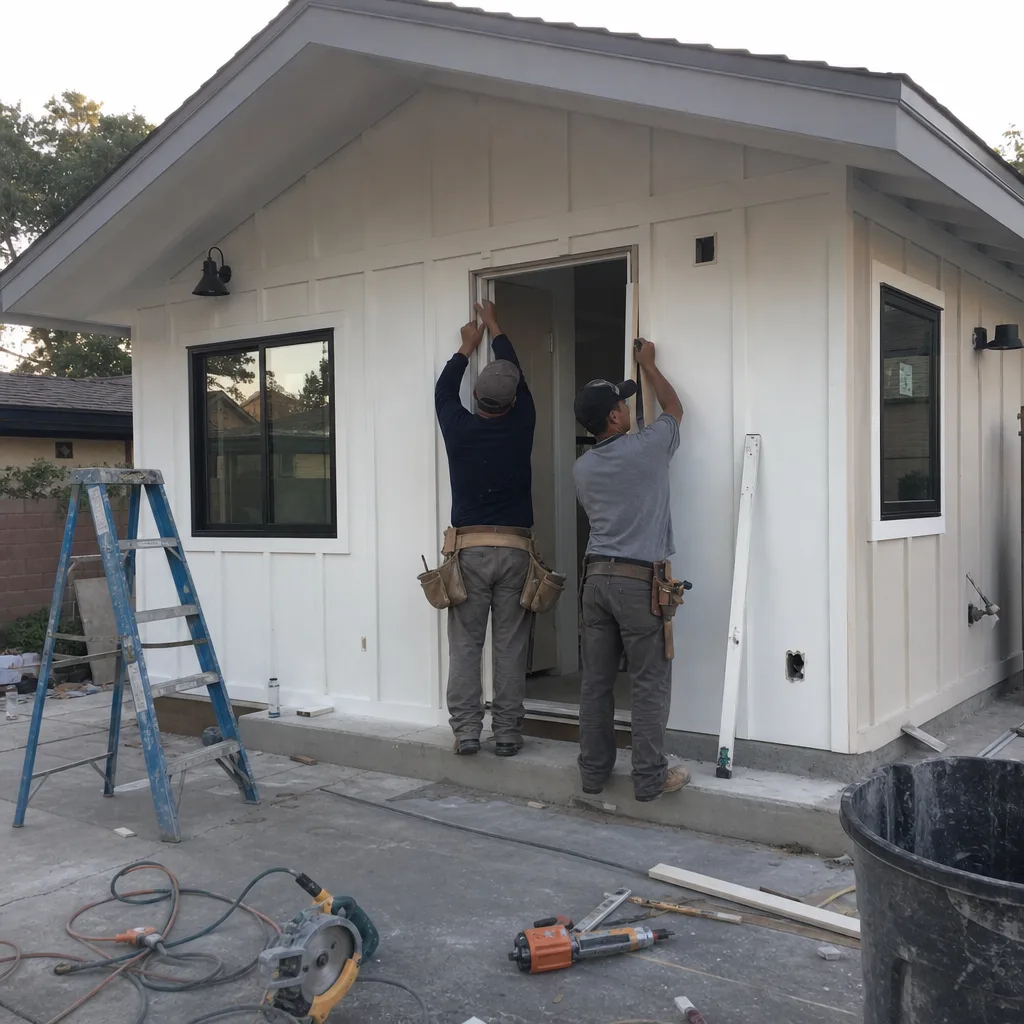
Chinatown’s narrow, irregular lots push most detached ADU projects toward a specific set of configurations. Here’s what we build most often on these parcels, and how each one fits the neighborhood.
Custom Built ADU
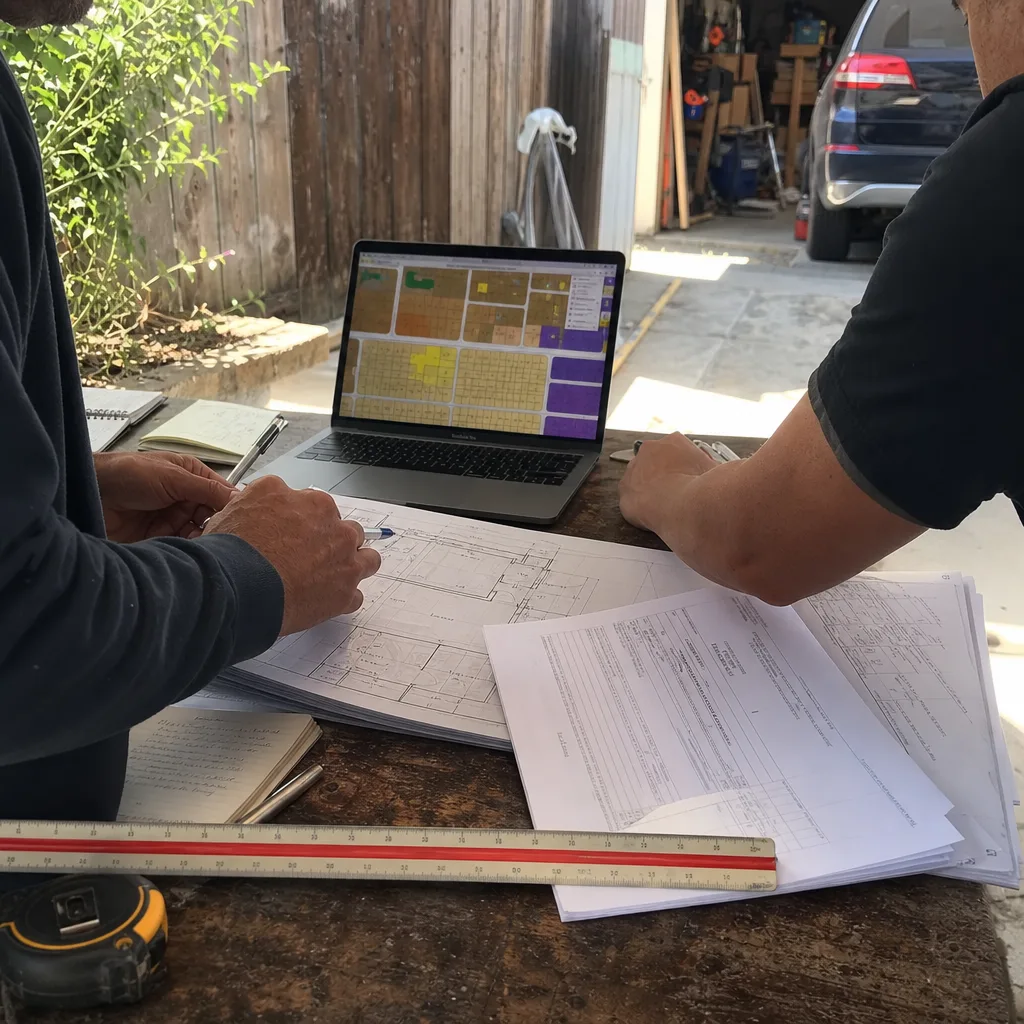
A custom detached ADU on a Chinatown lot is usually driven by what the parcel can actually hold after setbacks, not by what a catalog floor plan assumes. The residential courts off Cesar Chavez Avenue and the small-lot bungalows west of Broadway often have 25-foot-wide lots with side-yard setbacks that leave an ADU footprint of 400-600 square feet. That’s where a custom-built studio or one-bedroom makes sense: we design to the exact buildable rectangle, not the other way around. Our New Detached ADU team draws the permit set for the specific lot, including the seismic attachment details the city plan checker will require on a 1938-1965-era parcel. Custom built ADUs on these lots typically run $310,000-$410,000 all-in, depending on foundation work and utility upgrades.
Studio ADU
Studio ADUs are the most common detached configuration we permit in Chinatown, because they fit the buildable envelope on most of these courts and alleys. A 400-square-foot detached studio with a bath and a mini-split runs $265,000-$330,000 on a typical Chinatown lot, assuming the existing electrical service can carry the load. The mini-split isn’t optional here: Chinatown sits in a dense urban core that runs 5-8°F hotter than coastal LA neighborhoods, and a livable second dwelling needs mechanical cooling, full stop. We scope the cooling line item in the written price, not as an afterthought upgrade at the end of the job.
1-Bed & 2-Bed ADU
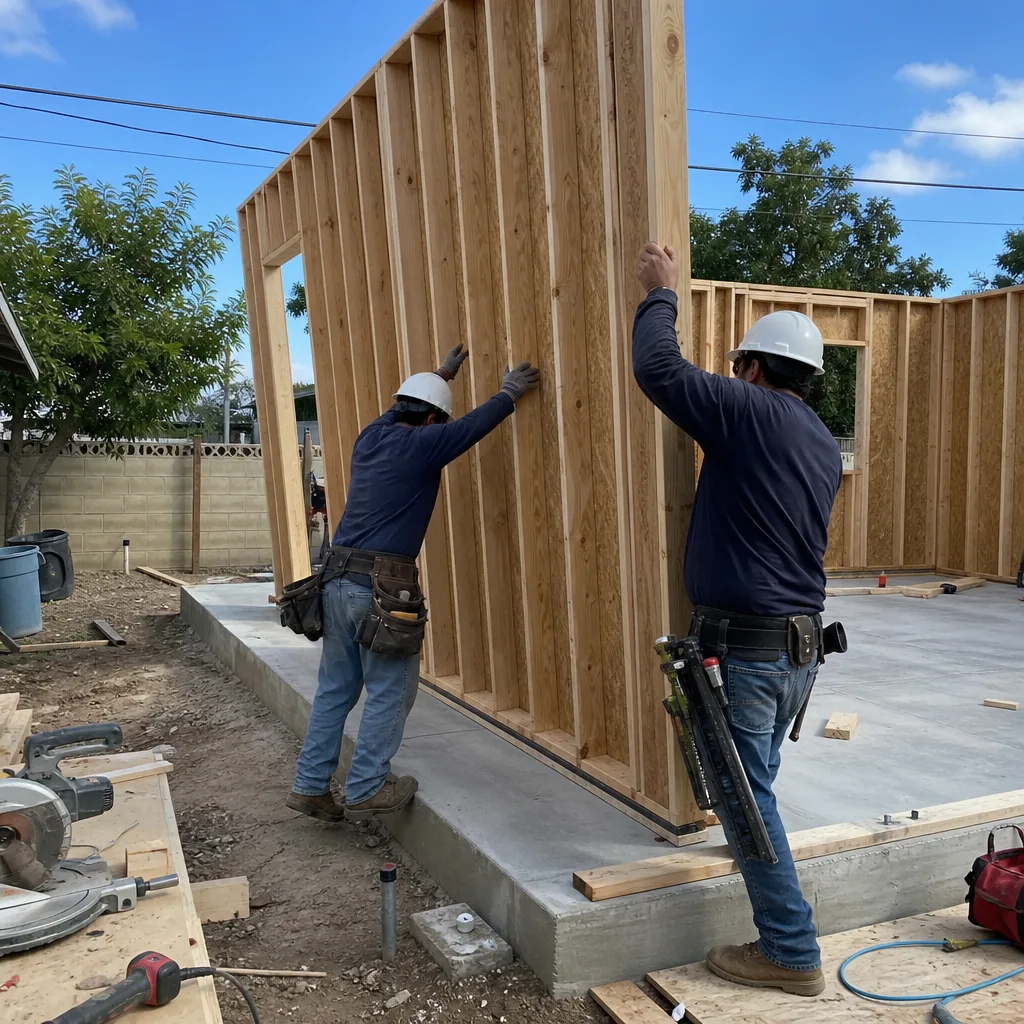
A one-bedroom detached ADU in Chinatown runs $330,000-$410,000. A two-bedroom pushes $390,000-$475,000. The jump between the two isn’t just square footage; it’s the second bedroom’s egress window, the added electrical circuit load, and often a larger water heater. For multigenerational households on parcels held by the same extended family since the New Chinatown’s 1938 founding, the two-bedroom is the configuration that lets an aging parent move into a separate unit with enough room for a caregiver visit or a grandchild staying over. That cultural priority is real in this neighborhood; we design for it, and we don’t pretend everyone wants a rental unit.
Prefab ADU Installation
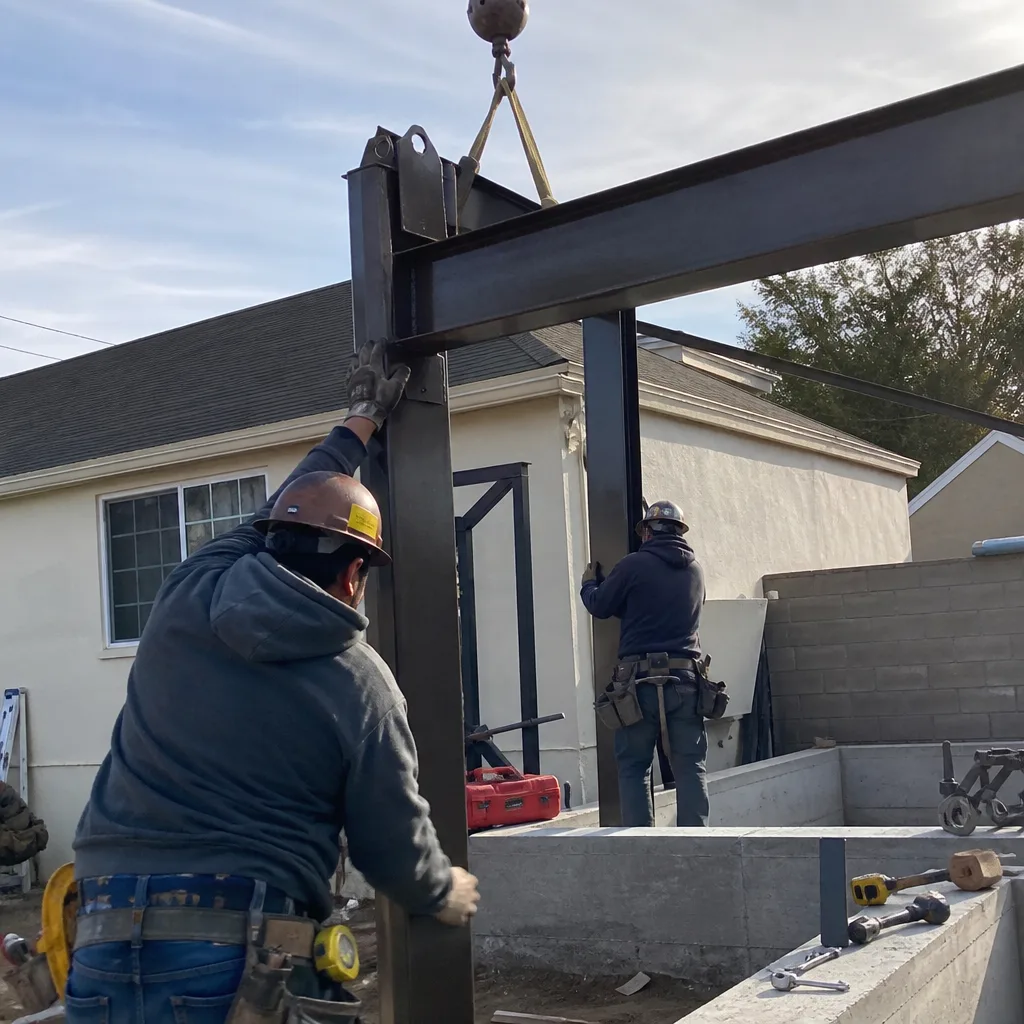
Prefab and modular systems can work on Chinatown lots, but they require a realistic read on crane access and staging. Many of these lots are mid-block with alley access too narrow for a crane setup, which pushes the prefab discussion toward panelized systems that get assembled on-site rather than a fully finished module lifted over the house. We specify and coordinate systems from Abodu, Cover, and Dvele within the same single contract, and the written price includes whatever crane, material lift, or traffic-control plan the specific lot requires. If a factory-built system is marketed at $180,000, expect the installed cost with foundation, utility connection, and crane/staging on a tight Chinatown lot to land closer to $250,000-$340,000. We quote the real number, not the brochure number.
What happens when you call
- 1
A real person answersNo phone trees - you reach a local pro.
- 2
You get an upfront price rangeHonest numbers before anyone is dispatched.
- 3
A background-checked tech heads outLicensed & insured, dispatched right away.
- 4
You approve before work beginsNothing starts until you say go.
Trusted Brands We Service in Chinatown
We specify prefab and modular systems across several manufacturers because no single system fits every Chinatown parcel. Abodu’s one-bedroom models work well on lots with a straight shot from street to foundation; Cover’s panelized approach suits mid-block courts where a crane can’t reach; Dvele’s high-performance envelopes make sense for owners who want aggressively lower cooling loads in this heat-island neighborhood. We don’t resell these units with a markup on the factory price and a shrug on the site work. We coordinate the whole install under the same written price, including the foundation, utility tie-ins, seismic anchoring, and finish work, and we use James Hardie siding on custom builds where the owner wants a fiber-cement cladding that holds up to Chinatown’s sun exposure without the repainting cycle of cheaper material.
Common New Detached ADU Problems We See in Chinatown Homes
These four failures come up over and over on Chinatown parcels. Most are avoidable if they’re scoped before the permit submittal, which is why we carry them as line items in the written price rather than discovering them mid-project.
- Seismic retrofit scope missing from the quote. Original post-and-pier foundations on 1938-1965 parcels frequently require bolting and bracing before LADBS will final an ADU permit. We quoted a project off Cesar Chavez Avenue last year where another company’s estimate skipped this entirely; the permit came back with a retrofit condition, and the owner was left negotiating an $18,000 change order. Our quotes include the retrofit line item when the site assessment calls for it.
- Party-wall notice skipped before foundation work. On a shared lot line, starting excavation before notifying the adjacent owner triggers a stop-work order from LADBS that can hold up a project for weeks. This is common on Chinatown’s apartment courts, where the wall you’re building next to isn’t yours. We file the notice before the first shovelful.
- Alley blocked by material delivery. Chinatown’s alleys are narrow and heavily used for trash pickup, deliveries, and resident access. A delivery that blocks the alley generates a complaint from the local business improvement district and a red-tag on the permit. We stage with a pre-approved traffic-control plan and sequence material drops around delivery windows, which is part of why our access assessment goes into the written quote.
- Galvanized supply line discovered mid-project. The original galvanized water supply lines on these 1938-1965 parcels are often at end of life, and the city requires replacement before final sign-off on many ADU permits. That’s a $4,000-$8,000 line item depending on the run. We identify it in the site assessment and put it in the written price, rather than treating it as a surprise.
Pricing for New Detached ADU in Chinatown, CA
Here’s what a detached ADU in Chinatown actually costs, based on the configuration and the condition of the underlying infrastructure:
- Studio ADU (400-500 sq ft): $265,000-$330,000 all-in
- 1-Bedroom ADU (550-750 sq ft): $330,000-$410,000 all-in
- 2-Bedroom ADU (750-1,000 sq ft): $390,000-$475,000 all-in
- Prefab/Modular (one module, installed): $250,000-$340,000 all-in
- Electrical panel upgrade (if required): $3,500-$6,500
- Water supply line replacement (galvanized to copper/PEX): $4,000-$8,000
- Seismic bolting and bracing on post-and-pier foundation: $12,000-$22,000
These ranges include the permit set, city fees, the build, and the final inspection. What moves a Chinatown project from the bottom to the top of the range is almost never the floor plan; it’s access and the age of the existing infrastructure. A lot with a straight street approach and a 200-amp panel lands at the low end. A mid-block court with alley-only access, a 60-amp panel, galvanized supply, and an unbolted post-and-pier foundation lands at the top. We write it all down before work starts, per Haven Standard Clause 1, and the estimate is yours to keep whether or not you build with us. Call (971) 497-2402 and we’ll put the numbers on paper for your specific lot.
We Also Serve Cities Near Chinatown
If your property sits just outside the neighborhood, our service area covers New Detached ADU in Chinatown plus Los Angeles, San Diego, San Jose, and San Francisco. The same written-price model applies, and we coordinate dispatch and scheduling from our Los Angeles office so crews arrive with the right staging plan for your specific city’s permit process. Call (971) 497-2402 and we’ll tell you whether your address falls in our direct service area.
Serving Chinatown, CA - Our Local Coverage Area
We’re based in the Chinatown area and know this community well. Use the map below to see our service coverage - if you’re nearby, we can almost certainly help.
FAQs - New Detached ADU in Chinatown
A narrow Chinatown lot with alley-only access adds $8,000-$18,000 to a detached ADU project compared to a lot with street frontage, because material delivery has to be staged off-site and walked in, or sequenced around traffic-control windows with a material lift. We assess your specific access route during the site visit and write the staging cost into the quote, so there’s no mid-project surprise when the crane doesn’t fit. Call (971) 497-2402 and we’ll tell you exactly what access looks like on your lot and what it does to the number.
Most 1938-1965 Chinatown bungalows have 60-amp or 100-amp panels, and a detached ADU requires its own feeder circuit plus enough capacity for the main house, which usually pushes a panel replacement to 200 amps. That’s a $3,500-$6,500 line item. We check the panel during the site assessment and include the replacement in the written price only if the load calculation says it’s required. Call (971) 497-2402 for an assessment of your specific panel.
On most 1938-1965 Chinatown parcels, yes. LADBS requires bolting and bracing on original post-and-pier foundations as a condition of ADU permitting when the detached unit ties into the existing site, and the retrofit typically runs $12,000-$22,000. We inspect the crawlspace or foundation access during the site visit and include the exact retrofit scope in the written price. Call (971) 497-2402 and we’ll tell you whether your foundation needs it and what it will cost on your lot.
Yes, and this is one of the most common projects we permit in Chinatown. Many parcels here have been held by the same extended family since the New Chinatown’s 1938 founding, and a detached two-bedroom ADU is often the configuration that keeps a parent on-site with room for a caregiver. We’re familiar with title situations involving three or four co-owners across two generations, and we’ll help you navigate LA’s owner-builder permit pathway if that’s the route you need. Call (971) 497-2402 and we’ll walk through your family’s specific parcel and what a detached unit looks like on it.
Construction noise in Chinatown is governed by LA’s standard work-hour ordinance, which permits work from 7 a.m. to 9 p.m., but most of our crews start at 7 a.m. and wrap by 4 p.m. on dense residential streets out of respect for neighbors. Pour days and delivery windows are sequenced around the 7 a.m. start rule, and we file the required notices before any foundation work on a shared lot line. Call (971) 497-2402 and we’ll explain the specific sequencing for your street.
Last spring we built a detached studio ADU on a narrow lot off Alpine Street where three co-owners across two generations held title. Our crew staged materials on the sidewalk using a pre-approved traffic-control plan and sequenced piling and pour days around the city’s 7 a.m. start ordinance to keep the shared wall with the neighbor intact. We upgraded the original galvanized supply line and added a mini-split for the urban heat island, getting the final sign-off without a single neighbor complaint. That’s the kind of project this neighborhood produces, and it’s why we scope for the constraints up front instead of treating them as surprises.
This page is built around the exact 1938-1965 electrical, plumbing, seismic, and narrow-lot access costs that surprise Chinatown ADU owners, because every detached ADU here starts with the city’s oldest-post-rebuild housing stock. If you’re ready to see those numbers for your specific lot, call (971) 497-2402. The estimate is free, it’s in writing, and it names the line items other companies leave out.
Written by Nadia Ellery, Owner at Ellery ADU Studio, serving Chinatown, CA since 2015.