
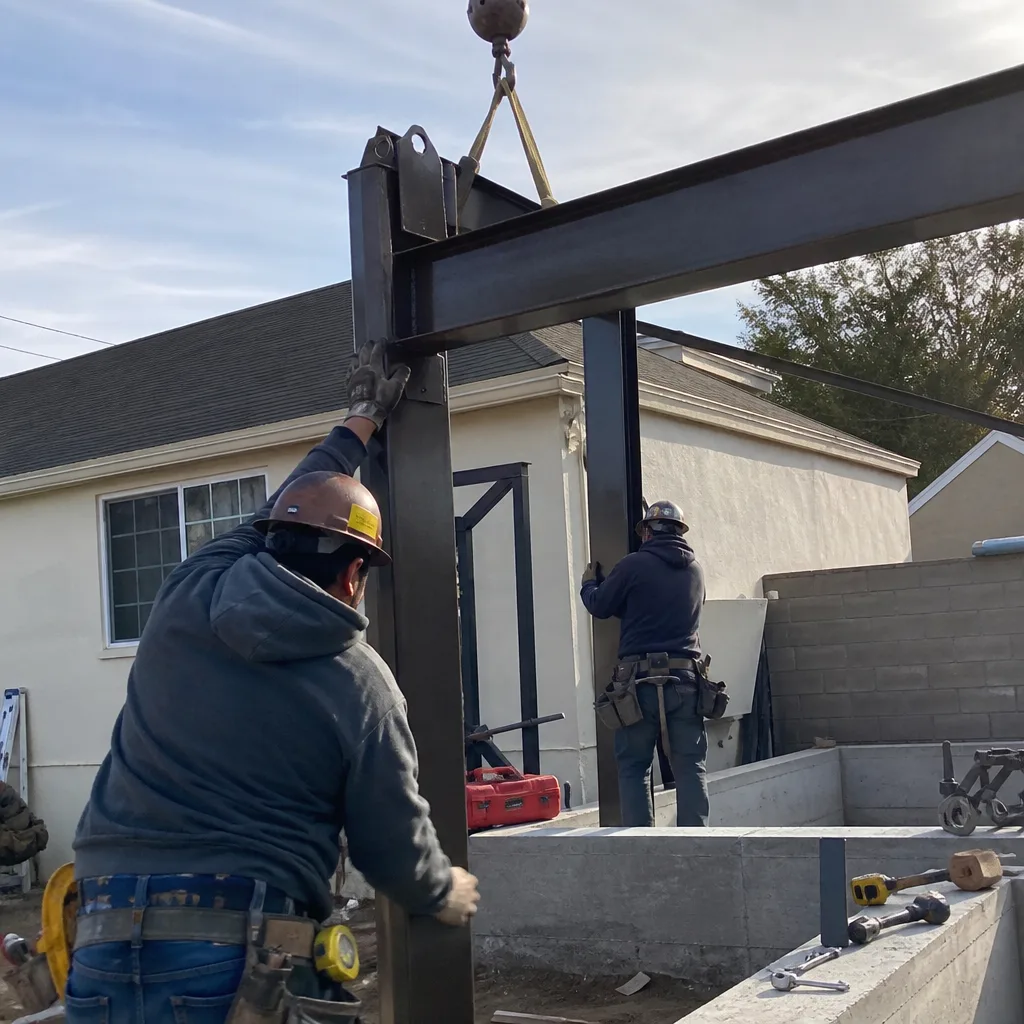
Fast, Reliable New Detached ADU Across San Antonio
A new detached ADU in San Antonio typically runs $180,000 to $320,000 all-in, from permit set through final inspection, and takes 10 to 14 months depending on whether you’re legalizing an existing casita or building from a bare pad. If you already have an unpermitted rear structure on a West or South Side lot, the job is often faster and cheaper than you expect, because the bones are already there. If you’re on the northwest side inside the Edwards Aquifer Recharge Zone, your project has a hard math problem to solve before any concrete gets poured, and that’s where our team earns its keep. Call (971) 497-2402 and we’ll walk you through what applies to your specific lot.
Why Ellery ADU Studio Is the New Detached ADU Team San Antonio Homeowners Call First
Ellery ADU Studio has designed, permitted, and built 900+ ADUs since 2015 under a single contract at a single written price. That matters in San Antonio because the city’s permitting process for detached units is unforgiving when the drawings and the construction are handled by two different parties. The designer blames the builder, the builder blames the designer, and your slab sits half-finished through a summer. We removed that failure point entirely: one contract, one written price, one accountable team led by Nadia Ellery.
Our San Antonio office dispatches crews across the metro daily, from Harlandale to Stone Oak and from Alamo Ranch to the Fort Sam Houston corridor. We know which HOAs reject ADUs outright before you waste $4,000 on surveys and preliminary drawings. We know which lots trigger impervious cover review because they sit inside the aquifer’s Contributing Zone. That local knowledge is the difference between a permit issued in four months and a denial letter that kills your project in week twelve.
San Antonio homeowners consistently tell us the same thing: they wanted a written price before anyone touched the property, and they wanted a photo record of what was actually done. Under The Haven Standard, both are non-negotiable. Clause 1 puts a written price on paper before any work begins. Every visit includes a documented photo record, so you see what we saw, not a summary of how it felt. And if the finished ADU is not built to the permitted drawings, the 365-Day Done Right Promise means we make it right, in writing, before the project starts.
Our New Detached ADU Services in San Antonio
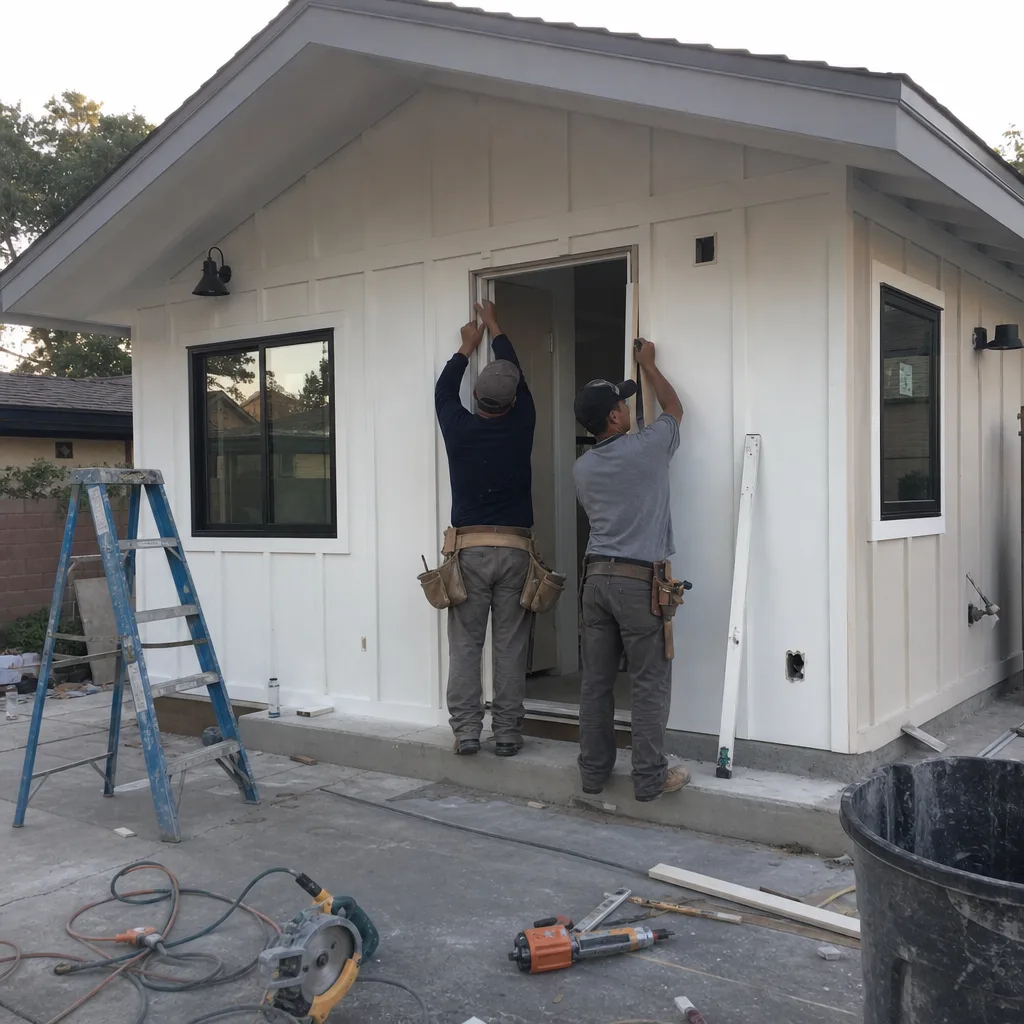
Every project starts the same way: a permit set that is actually buildable, priced line-by-line, with no door-side upsells and no scope creep after signing. Here’s how that plays out across the four most common New Detached ADU paths in San Antonio.
Custom Built ADU
A custom built ADU in San Antonio runs $220,000 to $320,000 for a 1-bed or 2-bed unit in the 500 to 750 sq ft range, depending on foundation conditions. On San Antonio’s shrink-swell clay and caliche soils, that foundation line item is not negotiable. A slab without post-tension engineering or deep piers will crack within a few seasons of boom-bust rain cycles, and you’ll see it in the drywall before the warranty ends. We size the structural work to the soil report, not to a generic Texas standard, and the permit set reflects exactly what gets built.
Prefab ADU Installation
If you’d rather not live through nine months of on-site framing, a prefab ADU from Cover, Dvele, or Mighty Buildings can compress the build window substantially. In San Antonio, prefab detached units typically run $190,000 to $280,000 installed, including the site work, foundation, utility connections, and the permit set. The catch: prefab does not dodge San Antonio’s zoning or aquifer rules. We coordinate the prefab delivery and set within the same single contract, so the factory and the site crew answer to one accountable team, not two.
Modular ADU
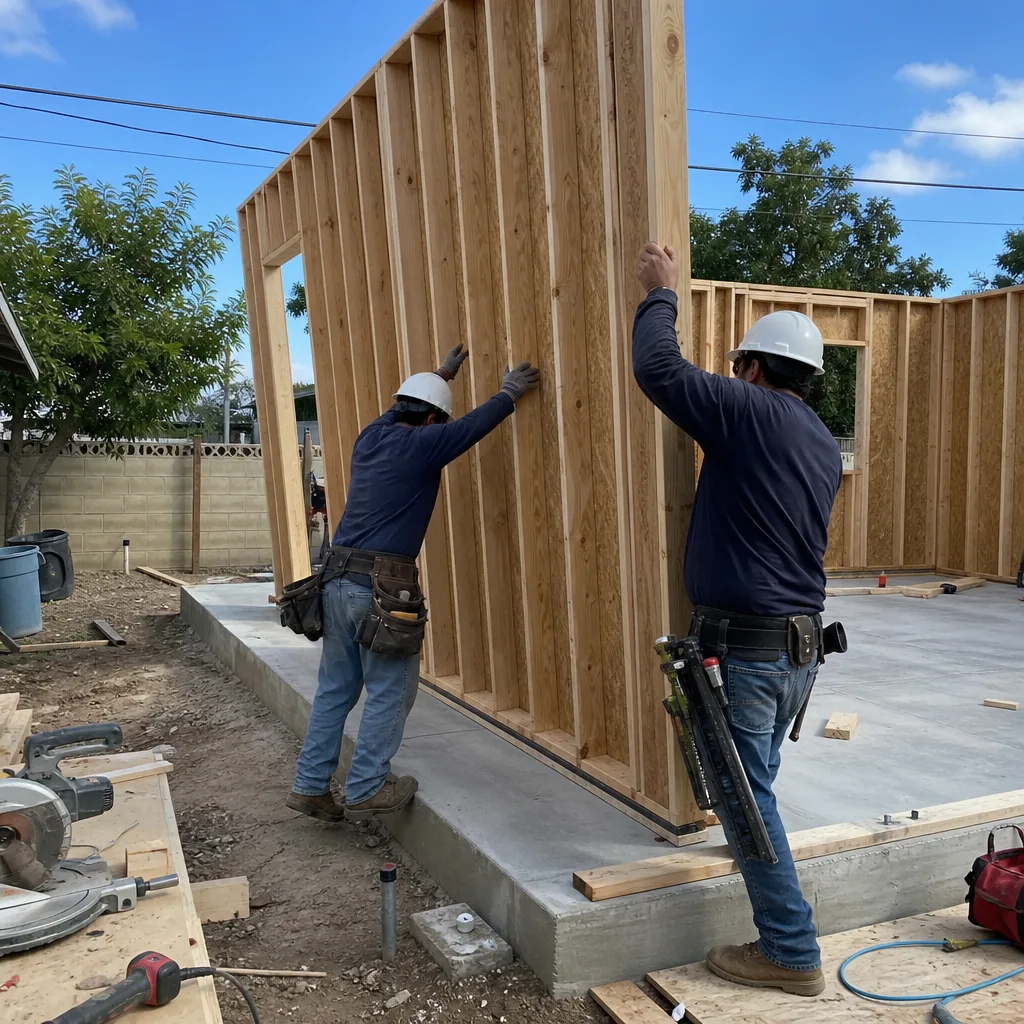
Modular ADUs split the difference between custom and prefab. In San Antonio, a modular 1-bed unit in the 400 to 600 sq ft range runs $180,000 to $260,000, drawings through final inspection. The advantage we see most on north-side lots is predictability: the modules are built off-site, inspected at the factory, and set in a matter of days once the slab passes. That’s a real benefit for Alamo Ranch and Stone Oak homeowners who want to know exactly which month the unit will be livable, especially when an aging parent is moving in on a schedule that cannot slip.
Studio ADU
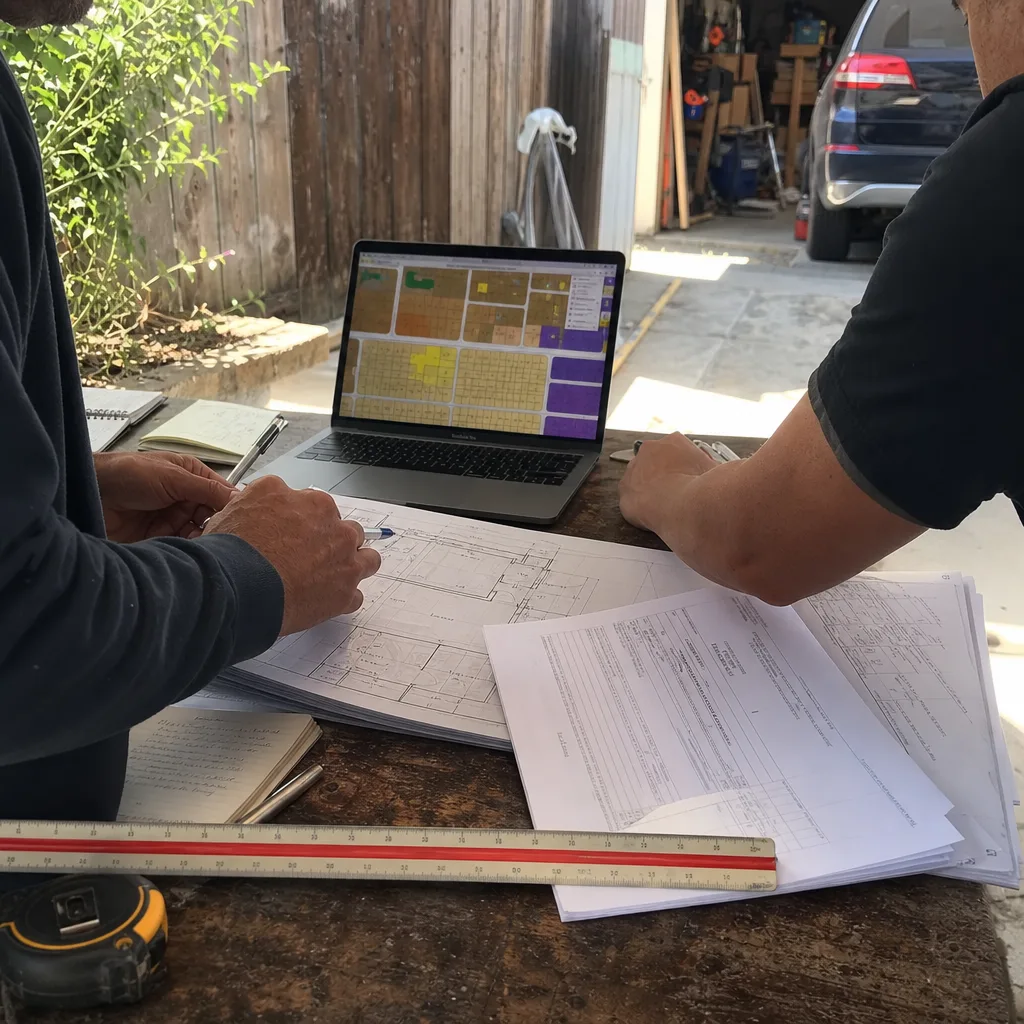
A studio ADU under 500 sq ft is the right answer for a rental unit on the southwest side near Lackland AFB, where the military PCS cycle keeps demand steady and the rent premium for a permitted, legal casita is real. These projects typically run $150,000 to $210,000 in San Antonio, and they pencil out fastest as income properties because the construction cost per square foot stays low while the rent per square foot stays high. But here’s the constraint every southwest-side client needs to hear early: San Antonio’s owner-occupancy requirement tied to ADU permits means you live on the property. That skews the conversation toward long-tenured homeowners, not out-of-state investors, and it changes the financing math. We’ll run those numbers with you before you spend a dollar.
What happens when you call
- 1
A real person answersNo phone trees - you reach a local pro.
- 2
You get an upfront price rangeHonest numbers before anyone is dispatched.
- 3
A background-checked tech heads outLicensed & insured, dispatched right away.
- 4
You approve before work beginsNothing starts until you say go.
Trusted Brands We Service in San Antonio
We specify and coordinate prefab and modular systems from Cover, Dvele, and Boxabl within the same single contract that covers your permit set and site work. That’s the part that trips up most San Antonio projects: a homeowner buys a prefab shell direct from a factory, then tries to bolt a local foundation crew and a local electrician onto a factory warranty that nobody will honor when the marriage goes wrong. We handle the coordination, the compatibility, and the warranty alignment. You get one contract and one accountable team, not three parties pointing fingers while your unit sits in a warehouse lot in Schertz.
Common New Detached ADU Problems We See in San Antonio Homes
- HOA covenants that prohibit ADUs outright. In Stone Oak and Alamo Ranch, the HOA is often stricter than the city. We’ve seen slabs poured and framing started before anyone read the covenants, and the HOA forced demolition. We verify the HOA language before any drawings are ordered, and we’ll tell you honestly if your subdivision is a dead end.
- Edwards Aquifer impervious cover caps. Northwest-side lots inside the Recharge or Contributing Zone carry hard limits on how much of your property can be covered by roofs and paving. A 600 sq ft ADU can get denied or force-reduced to 300 sq ft because the math simply doesn’t close. We run the impervious cover calculation before we run the design.
- Shrink-swell clay and caliche foundation movement. A detached ADU slab without post-tension engineering will crack and separate within a few seasons. We’ve watched original slabs on Harlandale casitas from the 1940s heave and settle for decades, and the fix is never cheap if you skip it up front.
- Shared HVAC systems that cannot handle the summer load. Sustained 100°F-plus days with high humidity from July through September mean even a 400 sq ft ADU needs a dedicated mini-split. Tapping an existing central system almost always leaves the detached unit above 85°F by the first August, and the comfort complaint follows within a week.
Pricing for New Detached ADU in San Antonio, TX
| Project Type | Typical San Antonio Range |
|---|---|
| Studio ADU (under 500 sq ft) | $150,000 - $210,000 |
| Prefab ADU Installation | $190,000 - $280,000 |
| Modular 1-Bed ADU | $180,000 - $260,000 |
| Custom Built 1-Bed / 2-Bed ADU | $220,000 - $320,000 |
| Casita Legalization & Upgrade (existing structure) | $90,000 - $160,000 |
Those are all-in ranges for San Antonio: permit set, foundation work, utility connections, construction, and final inspection. The single biggest variable is what’s under the dirt, and the second biggest is whether your lot sits inside the aquifer’s impervious cover jurisdiction. Everything we quote is a written price before any work begins, per Haven Standard Clause 1, and if we hand you a number, it does not change mid-project unless you change the scope. Call (971) 497-2402 to schedule a free estimate and get a written line-item price for your specific lot.
We Also Serve Cities Near San Antonio
Our New Detached ADU in San Antonio team also runs projects in Schertz, Cibolo, San Marcos, and Kyle. The permitting bodies change, the aquifer rules soften or tighten depending on the county, and the HOA landscape shifts. If you’re just outside the Loop and wondering whether your lot supports a detached unit, call (971) 497-2402 and we’ll tell you what applies to your address, not what applies to a generic Texas ZIP.
Serving San Antonio, TX - Our Local Coverage Area
We’re based in the San Antonio area and know this community well. Use the map below to see our service coverage - if you’re nearby, we can almost certainly help.
FAQs - New Detached ADU in San Antonio
Yes, in most cases. The original single-wythe concrete block walls can often remain if they are structurally sound, and in Harlandale, our crew took a 1948 concrete-block casita that had housed three generations and was never permitted, upgraded it to a legal 1-bed ADU with James Hardie siding and a dedicated mini-split sized for the 100°F summer load, and added a post-tensioned slab to stop the clay-soil cracking the original slab had suffered for decades. The owner’s grown daughter now lives there full-time, and the property passed the city’s final inspection with the detached unit documented for the first time since it was built. The key is a structural engineer’s sign-off on the existing walls and a permit set that treats the project as a legalization and upgrade, not a ground-up build. Call (971) 497-2402 for an exact evaluation of your casita; we’ll tell you what the city will accept before you spend money on drawings.
The Recharge and Contributing Zones cap the percentage of your lot that can be covered by impervious surfaces, meaning roofs, driveways, and patios all count against a hard total. If your main house, driveway, and existing patio already consume most of that allowance, the remaining cover for a detached ADU might be 300 sq ft instead of the 600 sq ft you planned. We run that calculation as step one on any northwest-side lot, because it’s far cheaper to learn the ceiling before design than to watch a permit denial land after three months of drawings. Call (971) 497-2402 and give us your address; we’ll run the impervious cover math on the first call.
Most post-2000 Stone Oak subdivisions carry restrictive covenants that explicitly prohibit detached accessory dwelling units, and the HOA’s architectural review committee has the authority to enforce those covenants regardless of what the city’s zoning says. We verify the HOA covenants before any drawings are ordered, and if your subdivision prohibits ADUs, we’ll say so plainly instead of taking a deposit on a project that will never get past the architectural review board. Some Stone Oak HOAs allow attached conversions but not detached units, and that distinction can save or kill a project. Call (971) 497-2402 and we’ll check your HOA’s specific language.
Yes. San Antonio’s ADU permit process requires an owner-occupancy agreement, meaning you must live on the property as your primary residence, even if your plan is to rent the detached unit to military families on PCS cycles. That requirement is not waived for investors, and it shapes the entire financial conversation for southwest-side homeowners near Lackland AFB. The rental income is real, the demand from transient military families is consistent, and a permitted casita commands a premium rent that an unpermitted rear structure never will. But the owner-occupancy requirement means this is a long-term asset play for established homeowners, not an out-of-state income property. Call (971) 497-2402 to talk through the numbers for your specific situation.
A casita legalization and upgrade near Fort Sam Houston typically takes 4 to 7 months from first survey through final inspection, while a ground-up new detached ADU runs 10 to 14 months. The legalization path is faster because the structure already exists, the foundation is already in place, and the permit review focuses on upgrading to current code rather than approving an entirely new building. The trade-off is that you inherit whatever the original builder did well or poorly, which is why a documented photo record and a structural evaluation are the first steps. Call (971) 497-2402 and we’ll give you a written timeline for your specific property before you commit to anything.
Written by Nadia Ellery, Owner at Ellery ADU Studio, serving San Antonio since 2015.