
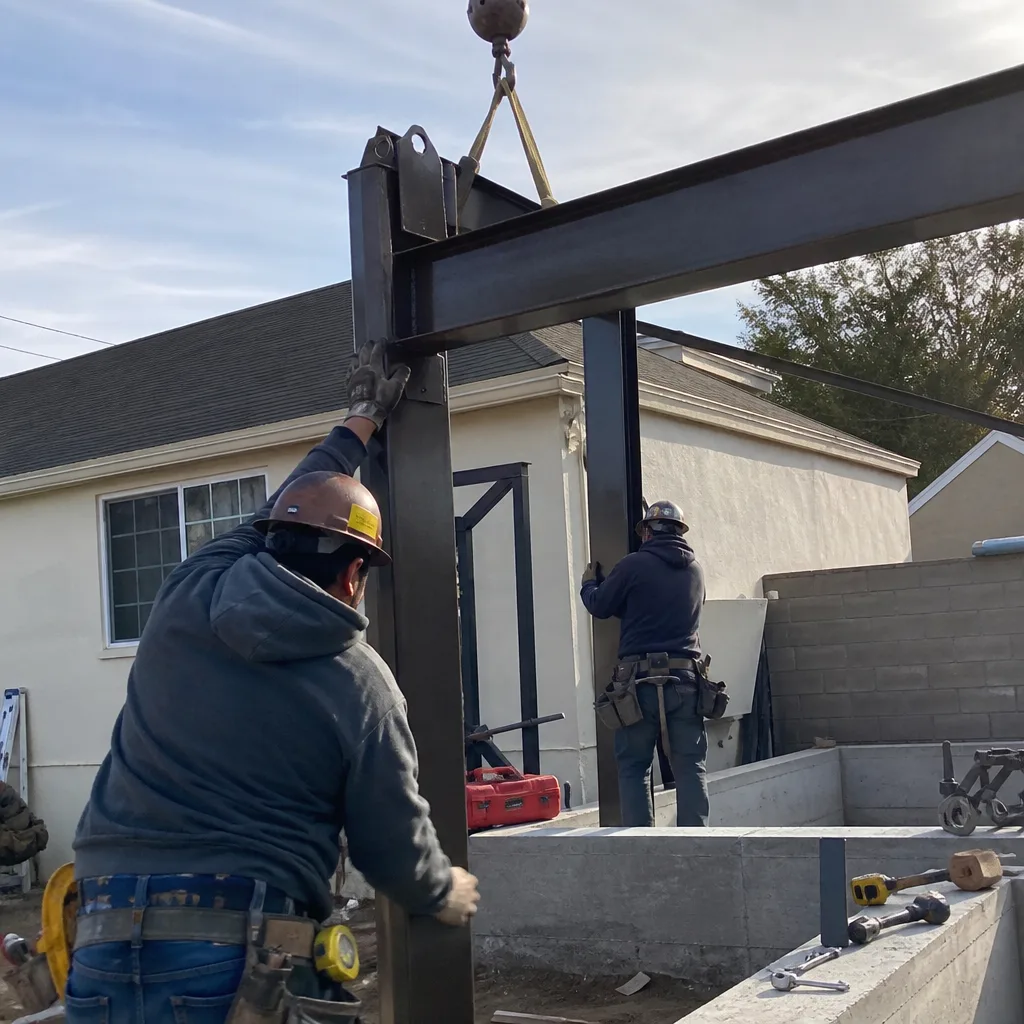
Fast, Reliable New Detached ADU Across Sugar Land
A new detached ADU in Sugar Land typically runs $195,000 to $340,000 all-in, from the first site survey through final inspection. The timeline spans 7 to 12 months depending on HOA review, flood-zone requirements, and utility trenching. If you’re weighing a detached unit for parents, adult children, or rental income, call (971) 497-2402 and we’ll walk the lot with you before you spend a dollar on drawings.
We work throughout Sugar Land’s master-planned communities. First Colony, Telfair, New Territory, Greatwood, Riverstone, and Sugar Creek are familiar ground. Our crews know the HOA nuances, the flood corridors, and the 1980s-to-2000s brick-veneer stock that dominates this city. When a Sugar Land homeowner asks whether a detached ADU is even possible on their lot, the answer rarely turns on City zoning. It turns on the deed restrictions attached to the property, and we pull those before anything else.
Why Ellery ADU Studio Is Sugar Land’s Preferred New Detached ADU Company
We’re a New Detached ADU design-build studio, not a general contractor that occasionally builds a backyard unit. Drawings, engineering, permit set, foundation, framing, MEP, and finishes sit under one contract at one written price. That matters in Sugar Land because the dual-approval path means a single point of accountability. Nadia Ellery founded the studio in 2015, and every project since has carried a written price before work starts, per Haven Standard Clause 1. No designer-versus-builder finger-pointing when an HOA revision comes back or a flood-elevation adjustment lands mid-project.
Sugar Land homeowners tend to research for weeks before calling. We’re comfortable with that. The documentation we provide is the documentation that actually moves a project forward: the HOA application package, the City of Sugar Land permit set, the FEMA elevation certificate when required, and a written scope that doesn’t shift at rough-in. We also keep a document photo record on every site visit, so you see what our inspector found, not a summary of how the meeting went.
We coordinate scheduling from our Houston office, but the crews that work Sugar Land are dispatched locally and know the city’s inspection rhythm. Sugar Land’s building department reviews to Fort Bend County’s adopted codes, and we’ve navigated enough plan reviews there to know what gets kicked back and why.
Our New Detached ADU Services in Sugar Land
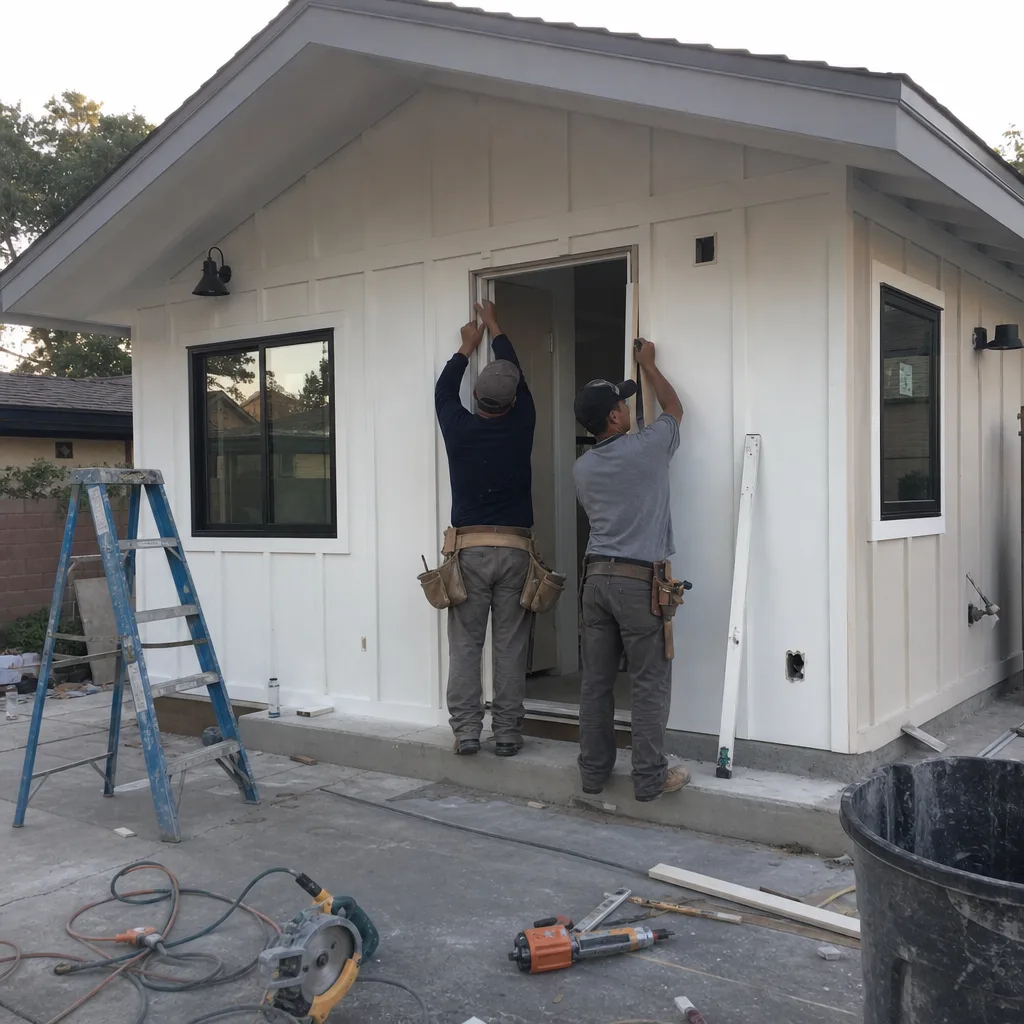
A detached ADU in Sugar Land is a different animal than the same structure in Houston or unincorporated Fort Bend County. Here, the path is longer and the failure modes are more expensive. Our scope for Sugar Land projects covers four main service lines, all under the same single contract.
Custom Built ADU
A custom-built detached ADU gives you full control over layout, orientation, and roofline, which is exactly what many Sugar Land HOAs require when they review architectural compatibility. First Colony and Telfair architectural committees frequently reject off-the-shelf designs that don’t match the neighborhood’s brick-veneer and hip-roof vocabulary. We design to the HOA’s guidelines first, then to code. Typical range: $220,000 to $340,000 for a 600 to 1,000 sq ft unit, including permitting, foundation, utilities, and finishes.
Prefab ADU Installation
Prefab systems from Abodu, Cover, and Dvele compress the on-site construction window, which matters when an HOA approval expires or a family member needs to move in by a fixed date. We specify and coordinate these systems inside our standard contract, so the prefab manufacturer’s scope and our site work don’t split into two competing change orders. On a prepared Sugar Land slab, a prefab unit can be set and weatherproofed in under three weeks. Typical range: $195,000 to $285,000 depending on unit size, foundation complexity, and utility runs.
Modular ADU
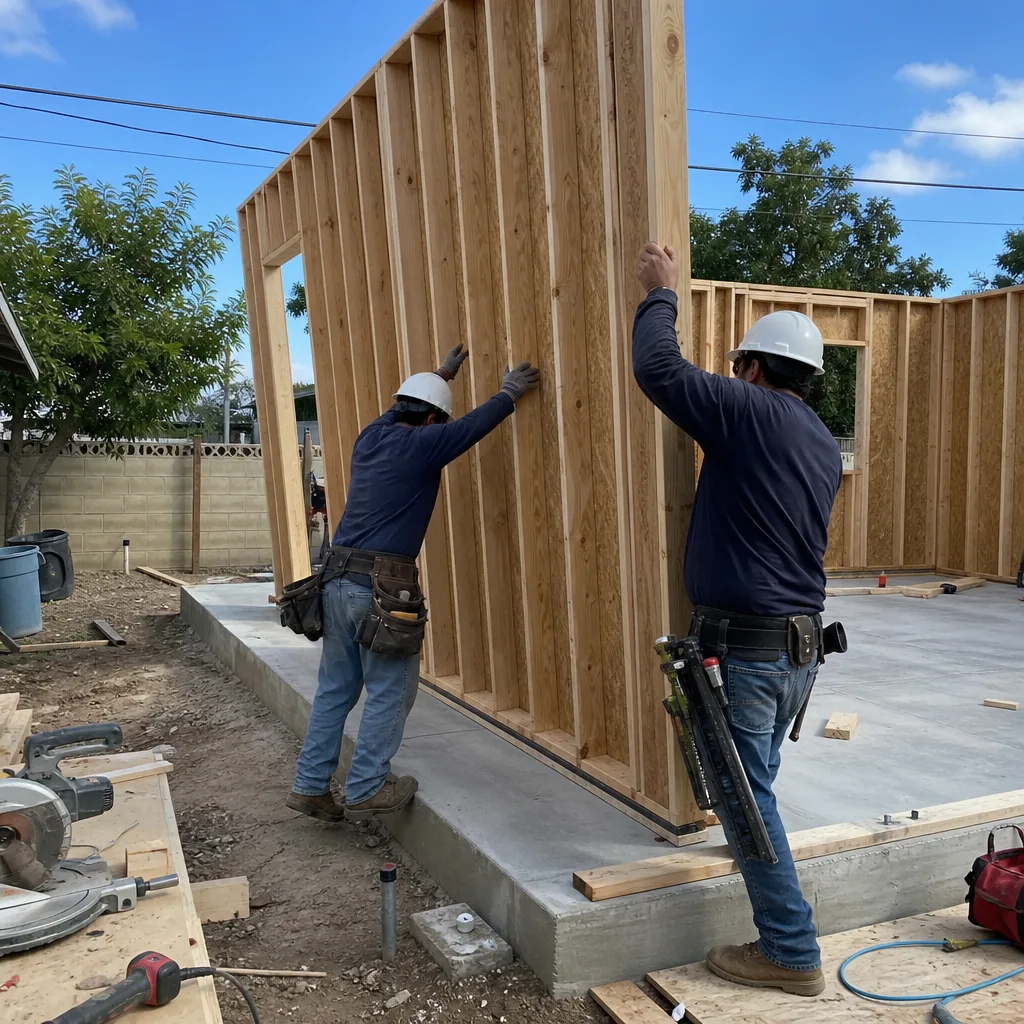
Modular construction offers more layout flexibility than panelized prefab while still moving much of the build off-site. For Sugar Land lots with long driveways or tight side-yard access, modular delivery requires a crane plan and sometimes a traffic permit from the City of Sugar Land. We handle that paperwork. Our modular ADUs range from $210,000 to $310,000 built to a Foundation-inclusive scope, with the same HOA-facing elevation drawings we provide on custom work.
Studio ADU
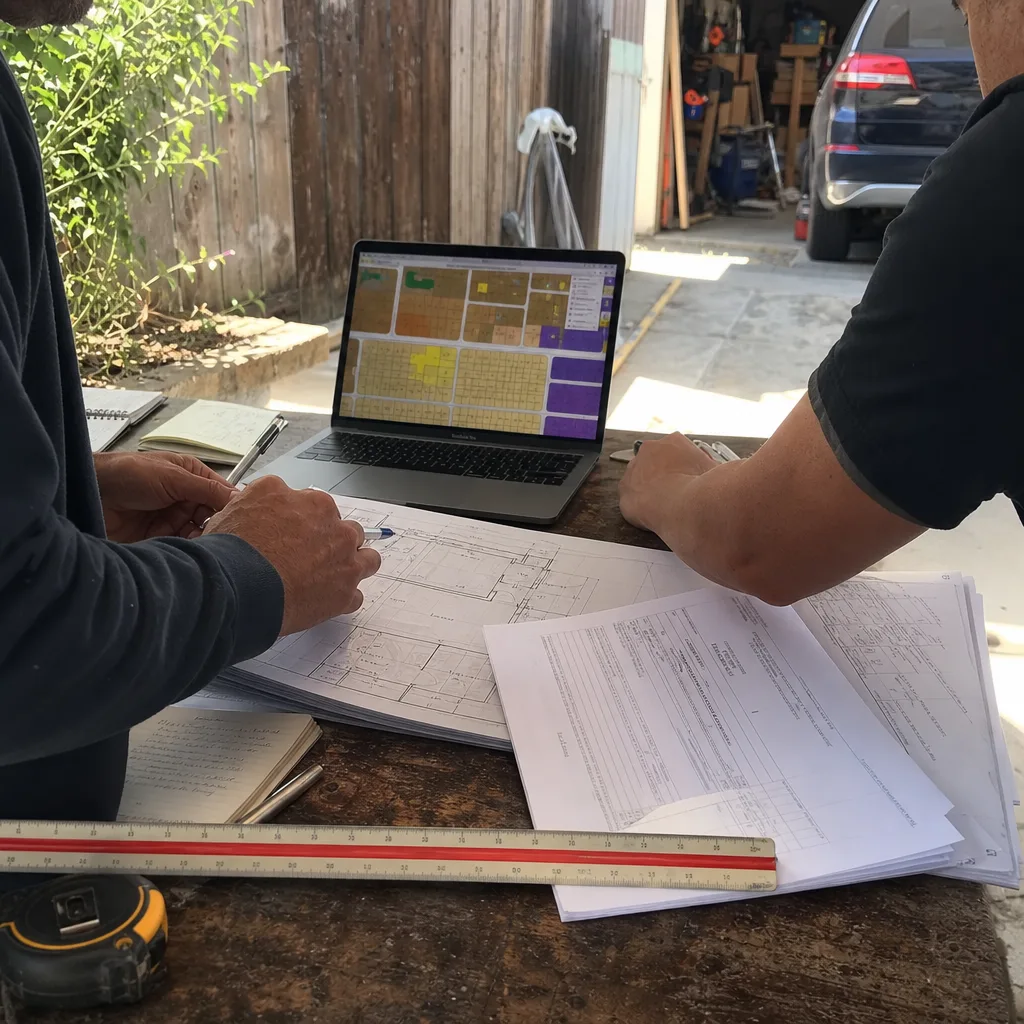
A studio ADU is often the only detached configuration an HOA will approve when a second dwelling unit is prohibited outright. The workaround we use in Sugar Land is a private study ADU: no second kitchen, so under many First Colony and New Territory deed restrictions it reads as an accessory structure rather than a dwelling. That’s a compliance path, not a loophole, and we’ve cleared it with multiple architectural review committees. Studio ADUs in Sugar Land run $185,000 to $260,000 depending on whether you add a bathroom, a wet bar, or a stacked laundry.
What happens when you call
- 1
A real person answersNo phone trees - you reach a local pro.
- 2
You get an upfront price rangeHonest numbers before anyone is dispatched.
- 3
A background-checked tech heads outLicensed & insured, dispatched right away.
- 4
You approve before work beginsNothing starts until you say go.
Trusted Brands We Service in Sugar Land
We specify and coordinate prefab and modular systems from Abodu, Cover, Dvele, and others, and we’ve built with James Hardie fiber cement on enough Sugar Land elevations to know the product line by heart. When we’re building in a brick-veneer HOA, we match Hardie plank or panel to the existing palette and submit the material spec with the ARC application. We don’t stock panels at a Sugar Land yard, but our suppliers deliver to local sites within days, and our subcontractor crews are familiar with the installation details these systems require. If a prefab manufacturer’s spec conflicts with a local code requirement, we resolve it in the permit set before it reaches the inspector.
Common New Detached ADU Problems We See in Sugar Land Homes
- Architectural plans paid for before the HOA denies a second dwelling unit. This is the single most common project-killing scenario in Sugar Land. A homeowner spends $8,000 on engineering, only to discover the First Colony Community Association’s architectural guidelines prohibit a second kitchen or a second front door. We pull deed restrictions on day one.
- Foundation set below FEMA-mandated flood elevation along the Brazos River or Oyster Creek. If your Telfair or Greatwood lot sits in Flood Zone AE, the finished floor of a detached ADU must clear the Base Flood Elevation plus freeboard. Pour the slab too low and the City issues a stop-work order. We pull the elevation certificate before the foundation is designed.
- Undersized electrical panels on 1980s-2000s homes. Sugar Land’s housing stock commonly has 100-amp service. A detached ADU with a mini-split, electric water heater, and laundry can draw enough to trip a main breaker. We typically replace the main panel with a 200-amp Square D QO panel before rough-in, and we write that allowance into the initial contract.
- HVAC units sized by rule of thumb that fail by June. A south-facing slab-on-grade ADU in Sugar Land’s humidity needs a manual-J load calculation, not a “1.5-ton should do it” guess. Undersized units leave the space at 85 degrees indoors by early summer. We size for latent load first, sensible load second.
Pricing for New Detached ADU in Sugar Land, TX
Here are the ranges we quote in Sugar Land, always as a written price under Haven Standard Clause 1:
- Studio ADU (400-600 sq ft): $185,000 – $260,000
- 1-Bed ADU (600-800 sq ft): $210,000 – $295,000
- 2-Bed ADU (800-1,000 sq ft): $250,000 – $340,000
- Prefab or modular unit (installed): $195,000 – $310,000
What moves the number in Sugar Land specifically: flood-zone foundation requirements, which add $15,000 to $35,000 when an elevation certificate and raised slab or pier system are required; HOA-mandated architectural revisions, which typically add $3,000 to $8,000 in design time; and utility trenching across larger 10,000 to 12,000 sq ft lots, which runs $8,000 to $18,000 depending on distance and existing obstructions. We don’t quote “starting at” numbers. We walk the lot, pull the deed restrictions, check the flood map, and hand you a fixed price. Call (971) 497-2402 to schedule that first visit.
We Also Serve Cities Near Sugar Land
Our crews cover Sugar Land and the surrounding metros. Homeowners in Missouri City, Alief, Pearland, and Houston face a different approval path than Sugar Land’s HOA-driven process, but the same design-build model applies. If you’re in a nearby city and weighing a detached ADU, the same written-price guarantee and single-contract structure carries over. Call (971) 497-2402 and we’ll tell you what your jurisdiction actually requires.
Serving Sugar Land, TX - Our Local Coverage Area
We’re based in the Sugar Land area and know this community well. Use the map below to see our service coverage - if you’re nearby, we can almost certainly help.
FAQs - New Detached ADU in Sugar Land
In many First Colony sections, no. The First Colony Community Association’s architectural guidelines can prohibit a second dwelling unit on a lot regardless of what City of Sugar Land zoning would otherwise approve. The specific restriction varies by section and recorded plat. We pull your deed restrictions and the governing ARC guidelines before any design work begins, so you never pay for engineering that dies at committee review. If the restriction is absolute, a private study ADU without a second kitchen is sometimes approvable as an accessory structure. Call (971) 497-2402 and we’ll review your specific plat in the first walkthrough.
Because any new detached dwelling connected to your home’s electrical service requires a load calculation, and many 1990s Sugar Land homes have 100-amp panels that don’t clear under current Fort Bend County code requirements when you add a mini-split, water heater, and lighting circuits. The City permit review flags this at plan check, not at rough-in. We write a panel upgrade allowance into the contract up front, and if the existing panel won’t clear the calculation, the replacement cost is already covered in the written scope. A surprise panel swap we didn’t disclose is not how we work.
You’ll need a FEMA elevation certificate, a foundation design that places the finished floor above the Base Flood Elevation plus freeboard, and typically a raised slab or pier-and-beam system instead of a standard slab-on-grade. Richmond sits on higher ground in many areas and often avoids these requirements entirely. On a Telfair lot in Flood Zone AE, expect to add $15,000 to $35,000 in foundation and engineering costs, plus additional plan review time from the City of Sugar Land’s floodplain administrator. We order the elevation certificate before we finalize the foundation design, so the number is in the written price, not a change order later.
It depends on the recorded deed restrictions for your specific section of New Territory. The HOA’s architectural guidelines often define a second dwelling unit by the presence of a kitchen, not by construction method. A prefab unit from Abodu with code-compliant plumbing and a kitchenette will likely read as a second dwelling under that definition. We review the governing documents first, then tell you whether a prefab path is viable. When it is, we coordinate the Abodu or Boxabl delivery, crane plan, and site utilities inside our single contract, so you’re not juggling a manufacturer and a general contractor separately.
We run a manual-J load calculation for every detached ADU we build in Sugar Land, using the actual orientation, window area, insulation values, and local design temperatures. South-facing exposure and the region’s humidity push latent load up, so we frequently spec a unit a half-ton larger than a rule-of-thumb guess would suggest. The manual-J is part of the permit set we submit to the City, not an optional add-on. If a prior contractor quoted you a system without a load calculation, we’ll review their number and tell you what we’d specify instead.
Written by Nadia Ellery, Owner at Ellery ADU Studio, serving Sugar Land since 2015.