
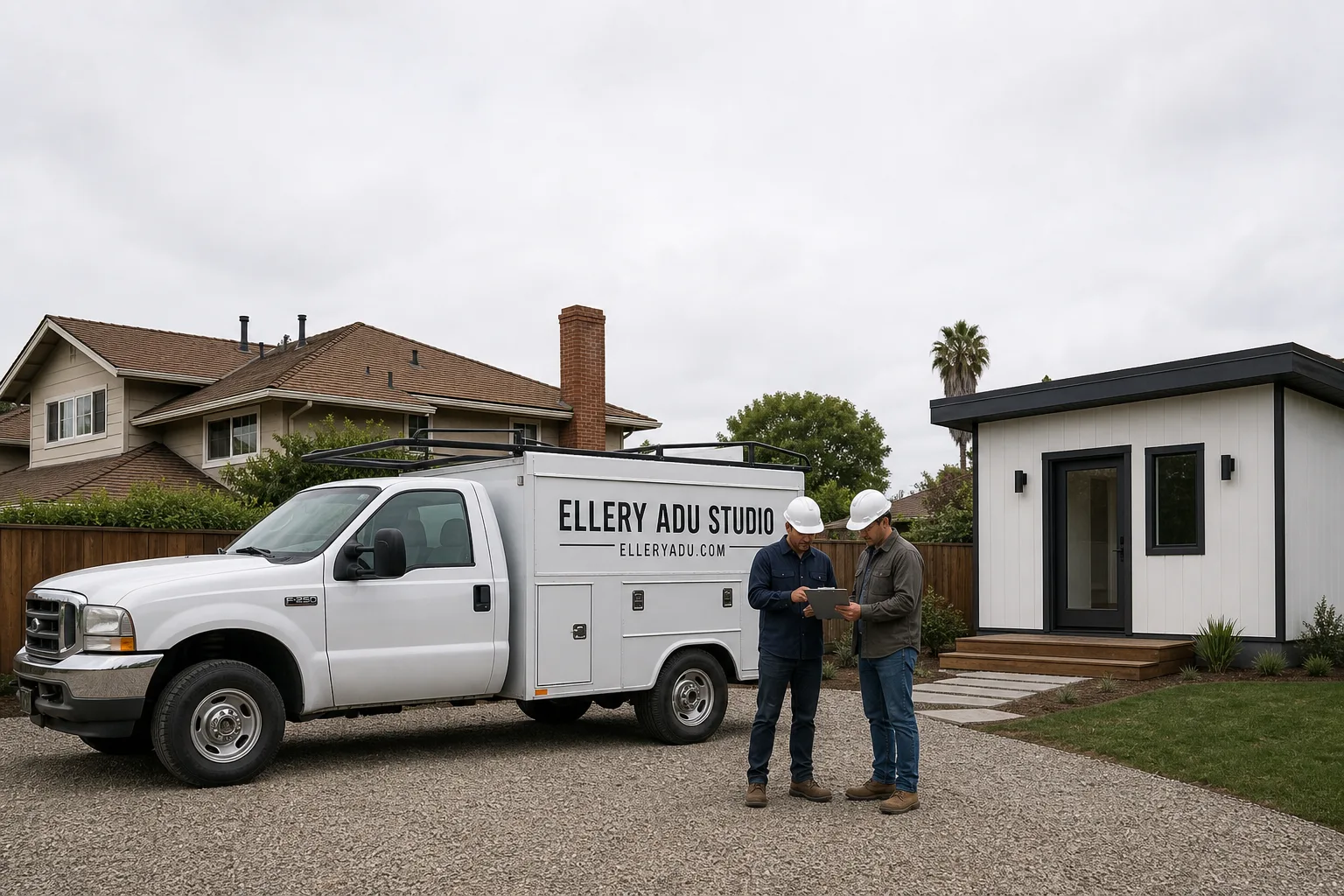
Garage Conversion ADU Stopped Working
A garage conversion ADU that has “stopped working” almost always means one of four things: a utilities system has failed (electrical, plumbing, or HVAC), a permit-required component was never properly installed and is now showing symptoms, a structural or weatherproofing detail has failed and the space is no longer habitable, or a post-construction defect has surfaced that the original builder left undisclosed. None of these are cosmetic problems, and none of them get smaller if you wait.
The phrase “stopped working” covers a wide range of symptoms – a unit that trips breakers every time the tenant runs a space heater, a mini-split that cools the garage half-attached to it but not the converted ADU side, a bathroom that drains slowly or not at all, a door that no longer latches because the framing has shifted. Each symptom points to a different root cause, and diagnosing the root cause correctly is the whole job. What follows is a plain walk-through of what each pattern usually means and what you can safely check before your local Ellery ADU Studio team arrives.
Why It Happens
1. The Electrical System Was Undersized or Improperly Sub-Paneled
Garage conversions require a dedicated electrical sub-panel sized for a dwelling unit, not the 20-amp circuit a typical attached garage runs on. If your converted ADU trips breakers when normal household loads run simultaneously – refrigerator, microwave, space heater, laptop chargers – the original panel work was likely undersized or the circuits were not properly separated from the main house load. You may also notice outlets that feel warm to the touch or lights that dim when an appliance kicks on. Both are signs the wiring is working harder than it should be.
Safety note: Do not open the sub-panel yourself. Electrical panels carry live current even when the breaker is tripped, and a miswired panel in a conversion can arc without warning. Stop using high-draw appliances, document which breakers are tripping, and call a professional.
2. The HVAC or Ventilation System Is Failing
Mini-split systems are the most common HVAC choice in garage conversions because they require no ductwork, but they are also frequently undersized for the actual conditioned square footage or installed without a line-set length that matches the manufacturer’s specification. If the unit runs constantly and still can’t hold temperature, or if it produces condensation inside the living space rather than draining it outside, the install spec is likely wrong. A refrigerant leak is another common failure – you’ll notice the unit blowing warm air and, sometimes, a faint hissing sound near the air handler.
3. Waterproofing or Framing Has Failed
Garage slabs were designed to drain outward, not to sit beneath a finished floor. If the original conversion didn’t include a proper vapor barrier, subfloor system, and perimeter drainage break, you’ll see the failure as buckling flooring, visible efflorescence (a white chalky deposit) on the base of the walls, or a persistent musty smell that no amount of ventilation clears. Framing failures show up differently: doors and windows that no longer open and close cleanly, visible gaps at the top plate where the wall meets the ceiling, or drywall cracks that follow the stud lines rather than running horizontally.
4. A Permit-Required Inspection Was Skipped
This is the cause homeowners least want to hear and the one that explains the most persistent “stopped working” symptoms. When a garage conversion is pulled without a permit or when the permit is pulled but inspections are waived or falsified, the work that’s hardest to see – fire blocking, insulation, structural connections, egress window sizing – is also the work that was never verified. You’ll know this is the issue if the ADU was built by a previous owner, if you can’t locate a finaled permit in your local building department’s records, or if the unit simply doesn’t behave like a properly finished living space despite looking fine on the surface.
What to Do Right Now
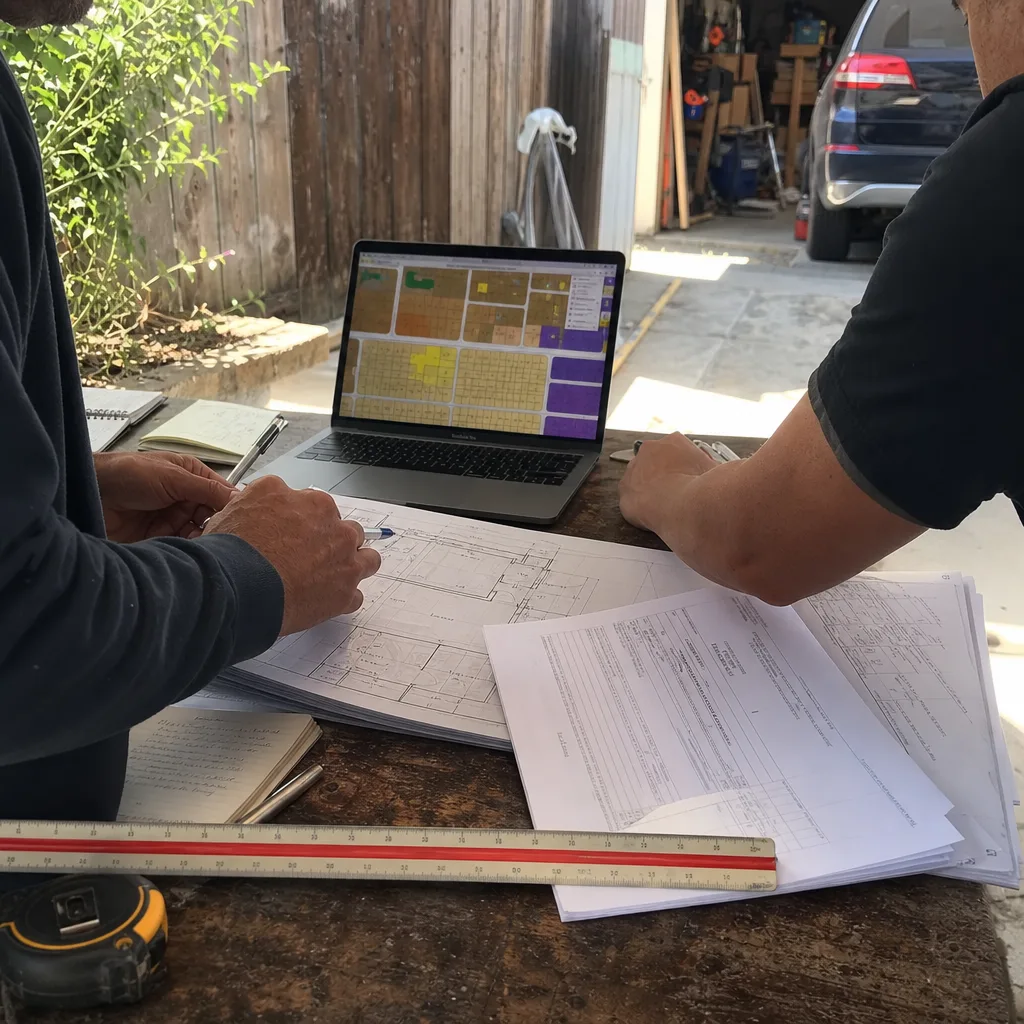
- Document everything before you touch it. Take photos and short videos of every symptom – the tripped breaker, the wet floor, the gap in the framing, the HVAC readout. This evidence matters when your local Ellery ADU Studio team arrives and when a permit revision or insurance claim is involved later.
- Stop using the electrical system if breakers are tripping repeatedly. Reset the breaker once to confirm it trips again, then leave it off. A breaker that trips under normal load is telling you there is more current on that circuit than the wiring can safely carry. Running it again is not a diagnostic step – it’s a fire risk.
- Do not attempt to open or re-wire the sub-panel yourself. Even with the main breaker off, parts of a residential panel remain energized. This is one of the genuinely dangerous components in a conversion; flag it, photograph the panel label, and let a licensed electrician open it.
- Check your local building department’s online portal for a finaled permit. Search your address and look for a “Certificate of Occupancy” or “Final Inspection Passed” notation attached to the ADU or garage conversion permit. If you find an open permit, a permit with no final, or no permit at all, write that down – it changes what needs to happen next.
- If you smell gas near any appliance, leave the unit immediately, do not operate any switches or outlets, and call your gas utility’s emergency line before calling anyone else. Gas leaks in a converted space are not a home-improvement problem; they are an emergency utility problem first.
How We Fix It
When your local Ellery ADU Studio team arrives, the first thing they do is a documented site assessment – photos and readings of what’s actually there, not a summary of impressions. That documentation goes to you the same day, under the Evidence principle of The Haven Standard.
From there, the repair path depends on what the assessment finds. Most garage conversion failures resolve through one of two services: ADU Site Prep & Utilities (for electrical, plumbing, HVAC, and structural sub-systems) or Garage Conversion ADU work performed under permit to correct or complete what a previous builder left unfinished or unpermitted. If a permit revision or new permit is required, that is handled inside the same contract – the designer and the builder are the same entity at Ellery, which means neither can point at the other when the drawings don’t match the field conditions.
Before any work starts, you receive a written price. That is Haven Standard, Clause 1, and it applies to repair and remediation work the same way it applies to new construction. The 365-Day Done Right Promise covers the work we do: if it’s not built to the permitted drawings, we make it right. Most assessments are completed in a single visit; the repair timeline depends on what the permit authority requires.
Frequently Asked Questions
It depends on the specific failure, and you should find out before anyone sleeps there. Electrical faults, gas appliance issues, and structural failures that compromise egress windows or fire separation all create safety hazards that make the space legally and practically unfit for occupancy. Cosmetic failures – a drafty door, a slow drain – are less urgent but still need a documented diagnosis. If you’re not sure which category your symptoms fall into, call (971) 497-2402 and describe what you’re seeing; a live person picks up and can help you triage it.
Sometimes, but not always. If the original conversion was properly permitted and finaled, and the failure is a system component that needs replacement rather than a structural or code change, the work may qualify as a repair rather than an alteration. If the original work was never permitted or the permit was never finaled, a new permit is almost certainly required – and that’s not a burden, it’s what makes the finished unit legal to rent or sell. Your local Ellery ADU Studio team will identify the permit status as part of the initial assessment.
Call (971) 497-2402 and ask directly – a live person answers, not a voicemail queue. Scheduling depends on your location and current team availability, and your local Ellery ADU Studio team will give you a real answer rather than a promise that doesn’t materialize. What we can tell you is that the assessment, the written price, and the documented findings happen before any work starts, so there’s no reason to delay the first call.
There is no honest answer to that question before someone looks at the specific failure – a tripped breaker from an undersized circuit costs very differently from an unpermitted conversion that needs a full permit revision and finish corrections. What we can tell you is that every Ellery repair job is quoted in writing before work starts, with a flat price and a documented scope, under Haven Standard Clause 1. Call (971) 497-2402 to schedule your free written estimate – the price for your specific job, in writing, before anyone touches anything.
Get It Fixed
Call (971) 497-2402 – a live person picks up, day or night. Your local Ellery ADU Studio team will assess the failure, document what they find, and give you a written price before any work starts. No voicemail, no callback queue, no surprises.
Written by Nadia Ellery, Principal, Ellery ADU Studio – design-build ADU practice operating since 2015.
What Our Customers Say
"They walked us through setbacks and utility capacity before we paid anything, and told us one of our two options was not going to get approved."
- Mireille T."Every allowance was itemised at the start, so the finish selections did not turn into a surprise at the end."
- Benedict H."Handled the whole planning process. We went to one hearing and that was it."
- Rowena C.