
Abodu Site Prep & Utilities: The Los Angeles Owner’s Guide
We stock and install Abodu-compatible site prep and utility components across Los Angeles, with typical installed work running $4,800 to $18,500 depending on what failed and where your property sits. Most owners discover a site prep or utility problem the hard way: a sewer line backs up after the first heavy rain, a water pressure drop reveals an undersized lateral, or the electrical service can’t hold the ADU’s load once the heat pump kicks on. When that happens, the Abodu unit itself may be fine, but the infrastructure feeding it has to be corrected before the building performs the way it should. We diagnose, source the right components, and bring the work to code: usually within three to seven working days, not three to seven weeks.
What “Site Prep & Utilities” Actually Means for an Abodu
An Abodu unit arrives as a finished module, but it’s only as good as what it connects to. Site prep and utilities cover everything from the pre-pour grading and compaction to the water lateral, sewer tie-in, electrical service, and the trenching that ties them together. When we handle this phase for an Abodu in Los Angeles, our scope includes the foundation system the module sits on, the utility runs from the street or main dwelling, and the final connections the Abodu installation crew will need on delivery day. We’ve coordinated enough Abodu placements in Los Angeles to know exactly what their field team expects: a level pad within tolerance, stubbed utilities at specified locations, and clearance for their crane or flatbed access. Those details are in the permit set before we ever move dirt.
Which Abodu Models This Applies To
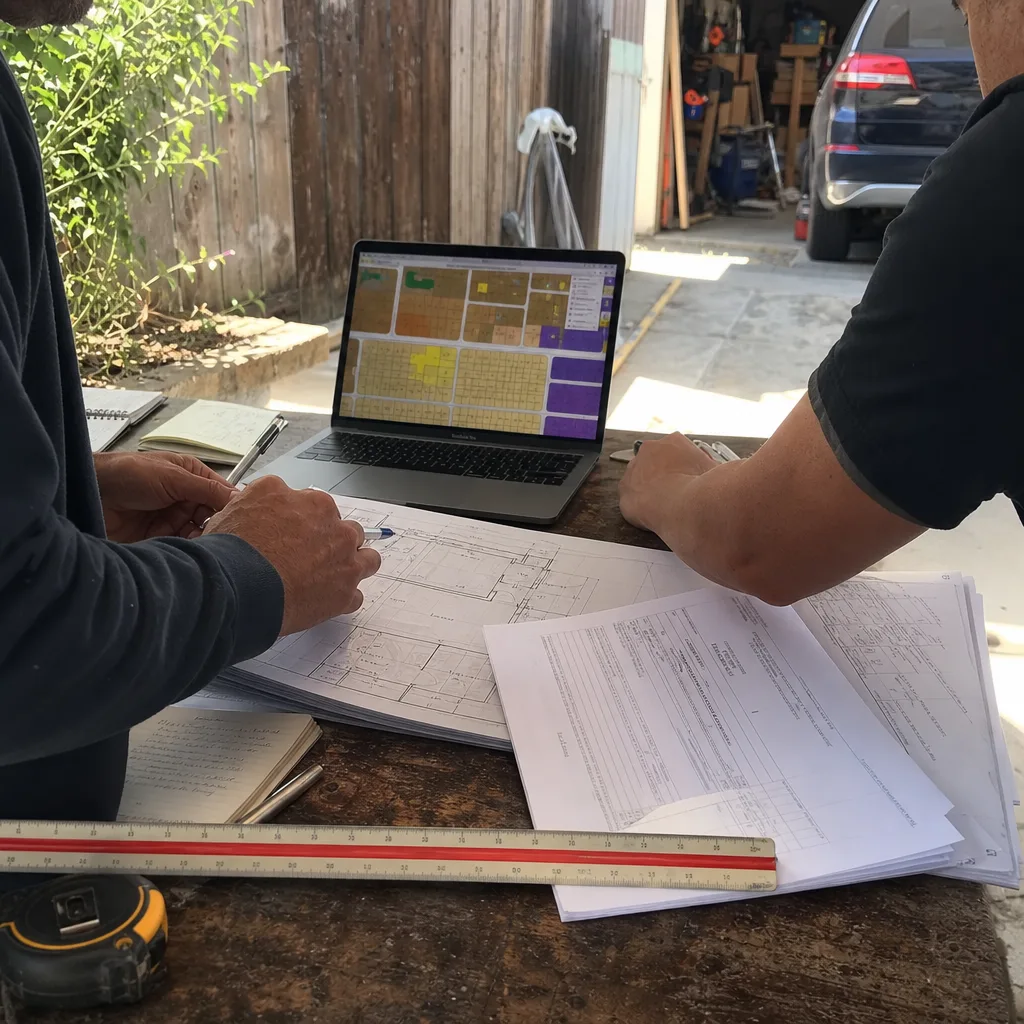
Abodu currently offers three core series: the Studio (starting around 340 square feet), the One Bedroom (roughly 500 square feet), and the Two Bedroom (around 750 square feet, though this larger unit faces steeper Los Angeles zoning review in many R1 neighborhoods). Site prep and utility work applies to all three, but the loads differ enough that we verify the model spec before finalizing any trenching or panel decision. The One Bedroom, for example, typically calls for a 100-amp subpanel when paired with a heat pump and electric range; the Studio can often run on a 60-amp feed. If you’re unsure which Abodu you have, check the compliance label on the exterior of the module’s street-facing wall: it lists the model name, serial, and the factory’s electrical and plumbing specifications. We match your existing or planned site work to that label, not to a guess. On the OEM versus aftermarket question for Abodu specifically: Abodu doesn’t manufacture the water, sewer, or electrical components themselves, so there’s no “Abodu brand” sewer lateral or circuit breaker. What matters is that the components meet Los Angeles Department of Building and Safety (LADBS) code and match the spec your Abodu factory order requires. We source accordingly: name-brand electrical panels (Square D, Eaton), schedule 40 PVC for sewer lines where LADBS allows it, and Type K copper for water service laterals. For foundation systems, we’ve worked with both slab-on-grade and the pier-and-beam setups Abodu’s installation manual accepts, and we’ll specify based on your site’s soil report, not on habit.
Signs Your Abodu Site Prep or Utilities Are Failing
- Low water pressure inside the ADU, especially in the morning or evening. This usually traces to an undersized water lateral from the main, mineral buildup in an older galvanized line, or a pressure regulator that’s failing. In Los Angeles neighborhoods like Westchester, Beverlywood, and the Valley’s older pockets, we see this on 40- to 60-year-old feed lines that were sized for a single house, not a house plus an ADU.
- Sewer odors near the ADU or slow drains after rain. This is often a bellied or separated sewer line under a newly installed foundation, or a cleanout that was buried during site work. Los Angeles has shifting clay soil; a line that drains fine in October can separate by February after the ground expands and contracts.
- The breaker trips when the ADU’s mini-split and kitchen are running together. This points to the electrical service being undersized for the actual Abodu model, or a subpanel that wasn’t balanced properly. It’s also the sign we see most often on units where a previous contractor cut corners on the load calculation.
- Visible settling at the foundation corners or cracks running through the module’s exterior cladding joint. For any prefab unit, including Abodu, uneven settling means the site pad wasn’t compacted to spec, or the drainage around the foundation isn’t moving water away. In parts of Los Angeles with expansive soil, like Eagle Rock and parts of the San Fernando Valley, this is the difference between a pad that lasts and one that needs re-levelling within three years.
- Standing water against the foundation or under the module after a normal rain. This is a grading and drainage issue, usually from a pad that was poured without the proper slope or from a missing curtain drain. It feeds every other problem on this list if left alone.
Replacement Cost & What’s Included
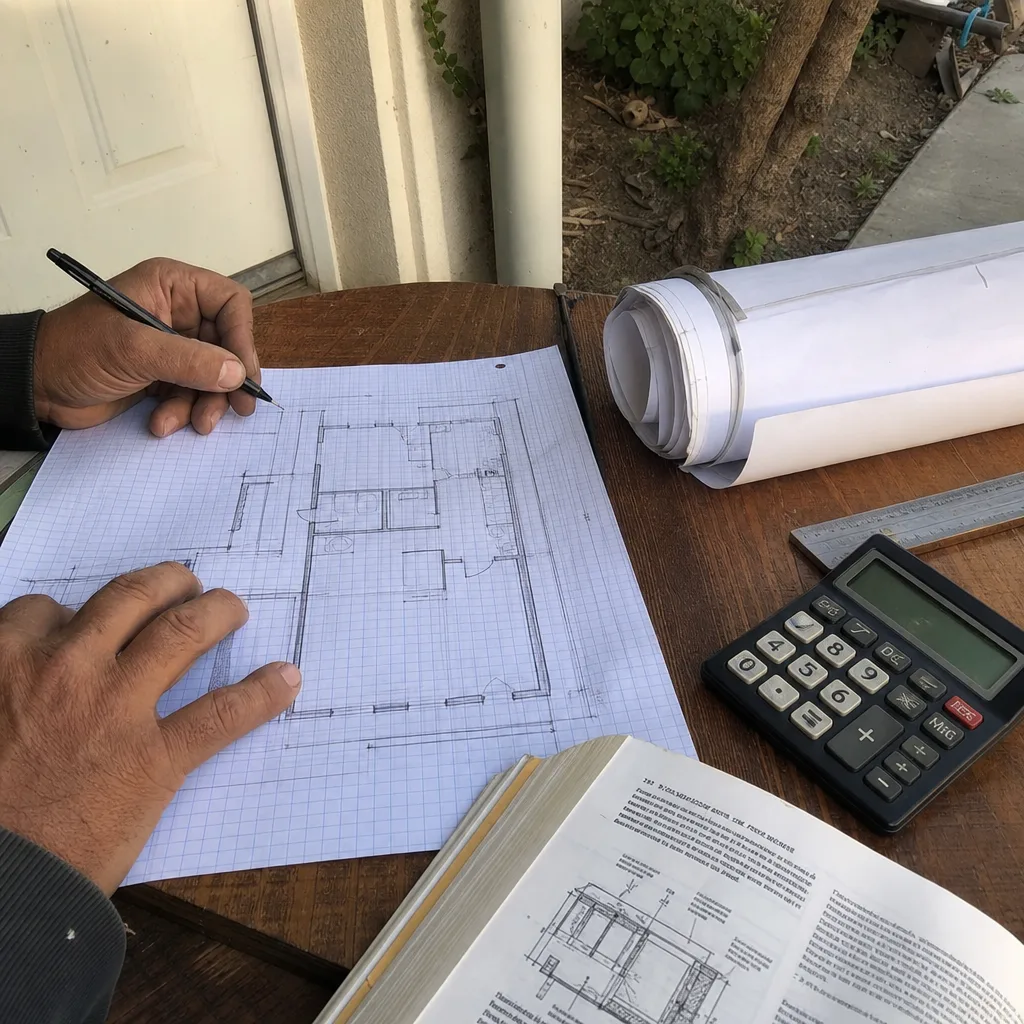
In Los Angeles, the range reflects the ground truth of local conditions: what’s under the dirt, how far the utility runs are, and what LADBS and LADWP require this permit cycle. Here’s a line-item view of typical installed costs:
- Electrical service to the ADU (new subpanel, trenching, conduit, feeder wire, load center): $2,800 to $6,400 depending on amperage and run length.
- Water service lateral (new Type K copper or PEX from the main to the ADU): $1,900 to $4,200 including trenching and backfill.
- Sewer tie-in (new lateral to city main or existing house sewer, plus cleanout): $3,200 to $7,800 depending on depth, distance, and whether we hit rock or old clay pipe.
- Foundation pad correction (re-compaction, re-levelling, or drainage repair under an existing Abodu): $2,500 to $9,000 depending on access and what we find.
- Full site prep for a new Abodu (grading, compaction, pad, stubbed utilities, pad-to-street runs): $12,000 to $24,000 all-in, with the written scope locking every line item.
Every one of those figures includes the work, the parts, the permit coordination, and the inspection support. The price we write is the price you pay: that’s Haven Standard Clause 1, and it’s in the contract before we start. When you work with us, you receive a document that says exactly what we’re installing, what it costs, and what code it’s meeting. No door-side add-ons, no “while we’re here” upsells. The 365-Day Done Right Promise sits behind the completed work: if it’s not right, we make it right.
DIY or Call Us?
You can check a few things yourself: note where the water pressure drops (one fixture or all of them), watch whether the drain slows after rain, and feel the breaker panel for heat with the back of your hand. That kind of observation helps us diagnose quickly. What you should not do is open an electrical panel, dig a trench near a marked utility line, or try to re-jet your own sewer lateral. A live 200-amp panel is not forgiving. A shovelled hit on a gas markout can empty a Los Angeles block. And a sewer line that backs into a finished ADU floor destroys more than an afternoon. For site prep and utility repair work on an Abodu in Los Angeles, the safe and honest move is a licensed contractor with the equipment and the permit knowledge. We’re an independent design-build studio, not affiliated with Abodu, and we’ve handled enough of their site packages to know the specs cold. Call (971) 497-2402 and describe what you’re seeing. We’ll tell you what it likely is, what it likely costs, and whether it’s urgent.
FAQs
A properly installed foundation pad, water lateral, and sewer tie-in should last 50 years or more in Los Angeles, with electrical services typically good for 30 to 40 years before a panel replacement or service upgrade is warranted. The failure points we see are almost always from shortcuts at installation: under-compacted pads, undersized laterals, and buried cleanouts. Do it correctly the first time and the infrastructure outlives the module’s finish warranty by decades. If you’re unsure what you currently have under your Abodu, call (971) 497-2402 and we’ll do a site inspection with a written report and photo record.
It depends on what failed. A section of sewer line with a single separation can often be spot-repaired with a section replacement and a new coupler. A water lateral that’s leaking at the meter connection can sometimes be fixed at that joint. But a pad that’s settled unevenly due to poor compaction usually requires re-levelling, and an undersized electrical feeder cannot be “fixed” by tightening connections: it needs to be replaced to carry the load. We’ll tell you which situation you have and write the scope either way. Call (971) 497-2402 for an exact quote; estimates are free and written, not verbal.
Most utility replacements, depending on the permit clearances from LADBS and LADWP, are completed within three to seven working days from the day we start. A full site prep for a new Abodu placement typically runs two to four weeks, including compaction testing, pad pour, and utility stubs. The variable is usually the utility company’s schedule for the meter or sewer connection, not our crew’s pace. We pull permits, schedule inspections, and document every visit with a photo record so you see the work, not just a summary. Call (971) 497-2402 to talk through your timeline.
We stock the common components on our trucks: Square D and Eaton breakers, schedule 40 PVC fittings, Type K copper sweat fittings, pressure regulators, and the standard cleanout assemblies. For larger items like subpanels, feeder wire, and sewer lateral sections, we source them from our Los Angeles supply partners on the specific project, usually within one day. Because Abodu’s site requirements are spelled out in their installation manual and we work from that document, we know exactly what to pull before the truck arrives. Call (971) 497-2402 and we’ll tell you what we’ll have on board.
Written by Nadia Ellery, Principal, Ellery ADU Studio at Ellery ADU Studio, serving Los Angeles and nearby areas.