
Cover Site Prep & Utilities: The Los Angeles Owner’s Guide
Site prep and utility work for a Cover unit in Los Angeles typically runs $18,000-$45,000 installed, depending on whether your parcel needs trenching across the full lot, a sewer lateral upgrade, or a panel swap. We stock Cover-compatible utility components and complete most site prep scopes in 8-14 business days once permits clear. Most owners discover this work failed months after the fact: a transformer on the unit trips the main breaker, a foundation stub-up is off by two inches, or LADBS flags the trench inspection because the conduit depth doesn’t match the approved drawings.
Which Cover Models This Applies To
Cover builds its accessory dwelling units as panelized, factory-finished modules that arrive on a steel chassis and get craned onto a prepared foundation system. The model line, Cover S1 and S2, both require the same core site utilities: a 200-amp electrical service or a dedicated 100-amp subpanel feeder from the main house, a 3/4-inch or 1-inch water service stub, and a 4-inch ABS sewer lateral with the correct slope. What changes between the two is the utility entry location. The S1 brings electrical and water in through the north wall chase. The S2 runs both through the floor cassette. If your site contractor stubs utilities at the wrong elevation, the Cover factory tolerances are plus or minus 1/4 inch on the floor penetrations. Most Los Angeles site prep crews miss that tolerance by a full inch or more, and the crane day turns into an expensive rework event.
When you’re matching parts, look for the factory data plate riveted to the chassis rail on the street side. It lists the serial, the model, and the utility spec block. For OEM Cover components, we coordinate through the factory’s approved channels. For aftermarket equivalents like conduit bodies, weatherheads, and meter cans, we specify brands the LADBS inspectors in Los Angeles accept without a second look: Eaton for panels, NDS for drainage boxes, and Charlotte for ABS fittings. We’re an independent design-build studio, not a Cover affiliate, so we match to spec and document everything in the permit set rather than leaning on a factory relationship.
Signs Your Cover Site Prep & Utilities Are Failing
- The main breaker trips when the unit’s HVAC kicks on. This points to an undersized feeder or a loose lug at the subpanel. In Los Angeles summer loads, a 60-amp feeder that passed inspection in March will fail in August when the heat pump and the dryer run at the same time.
- The sewer line backs up only after heavy rain. That’s groundwater entering through a poorly sealed cleanout or a cracked lateral. Clay soil in neighborhoods like Sherman Oaks and parts of the Valley expands and contracts seasonally, and a lateral bedded in uncompacted fill will shear at the property line connection.
- Water pressure inside the Cover unit drops when a hose bib runs outside. This usually means the site contractor tapped the domestic line instead of running a dedicated 1-inch service. On small parcels where the main house already demands 8-10 GPM, the ADU gets the leftovers.
- The unit’s floor feels spongy near the entry door. That’s often a foundation pad that was poured without compaction testing. In Los Angeles, a 4-inch slab over uncompacted fill will settle unevenly within the first two wet seasons, and the Cover chassis transfers every bit of that movement into the finished floor.
- Trench settling along the utility path. If the trench from the house to the ADU was backfilled without 95% compaction, it will sink. You’ll see a visible dip running across the yard. It’s not cosmetic: a settled trench is where conduit bends, pipe bellies, and roots find a way in.
Replacement Cost & What’s Included
In Los Angeles, a utility repair or trench rework for a Cover unit runs $4,500-$14,000 for electrical and water corrections, and $9,000-$24,000 when the sewer lateral needs a full replacement with LADBS inspection. A complete site prep package for a new Cover installation, drawings through final inspection, falls in the $18,000-$45,000 range. What drives the spread is not the parts. It’s the trench footage, the soil, the panel situation at the main house, and whether the city requires a sewer lateral upgrade to current code. Every price we provide is a written line-item quote before any work starts, per Haven Standard Clause 1. You’ll see the trench depth, conduit type, panel rating, and labor hours on paper, not a paragraph of “sitework, as needed.” The workmanship carries a written warranty, and the photo record on every visit documents what we found, what we did, and what it looked like when the inspector signed off.
DIY or Call Us?
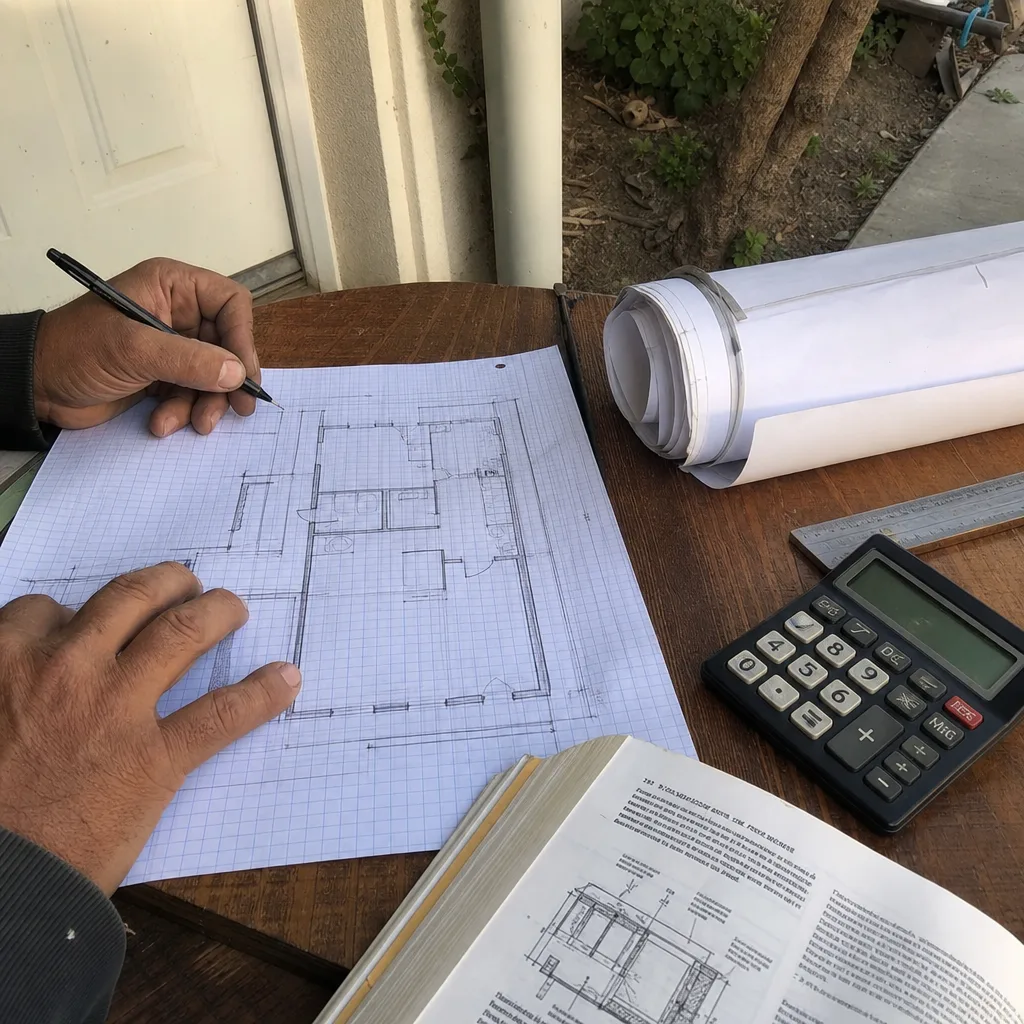
You can check a few things safely. Find the utility stub locations and measure the exposed conduit above grade. Look at the breaker feeding the ADU subpanel and write down its amperage. Test the water pressure at the ADU hose bib with a $12 gauge from any hardware store in Los Angeles. That information helps us quote accurately over the phone. But the repair itself, especially anything involving the electrical service, the sewer lateral, or trenching across gas and water lines, is not a weekend project. Hitting an unmarked gas line with a rented trencher is the kind of mistake that ends with a utility shutdown and a five-figure repair bill. If you suspect a utility fault on your Cover unit, call us at (971) 497-2402. We’ll tell you what to check, what it likely means, and what the repair scope actually looks like.
FAQs
A properly installed electrical feeder and water service should last the life of the ADU, 40 years or more. The sewer lateral is the weak link: in Los Angeles, original clay or Orangeburg lines from the 1940s through 1960s can fail at 50-70 years, and a lateral tied into an aging main line fails sooner. We quote replacements with 40-year material warranties on the pipe.
Sometimes. A loose lug, a corroded weatherhead, or a small sewer lateral crack within five feet of a cleanout can usually be repaired. But if the issue is undersized conduit, a bellied pipe, or a lateral that’s already halfway collapsed, a repair just postpones the same failure. We’ll tell you which category you’re in before any work is quoted. Call (971) 497-2402 and we’ll walk through what you’re seeing.
A focused utility repair, like a panel swap or a sewer lateral replacement in a straight trench run, takes 2-4 working days including inspection. Full site prep for a new Cover installation, including foundation, trenching, panel work, and LADBS inspection, runs 8-14 business days depending on permit clearance and soil conditions. Every written quote includes a schedule with dates, not a promise to “get to it soon.”
We keep the common items in stock: 200-amp meter cans and disconnects, 100-amp subpanel kits, Eaton breakers, NDS drainage boxes, Charlotte ABS fittings, weatherheads, and ground rods. Cover-specific chassis shims, anchor bolts, and the utility chase gaskets come from the factory, and we order those with the permit application timing so they’re on site before the crane day. We coordinate Abodu and Dvele systems the same way when a client is comparing prefab options.
For a written estimate on Cover site prep and utilities in Los Angeles, call (971) 497-2402. The quote you get is the price you pay, documented in writing before any shovel hits dirt.
Written by Nadia Ellery, Principal, Ellery ADU Studio at Ellery ADU Studio, serving Los Angeles and nearby areas.