
James Hardie Garage Conversion ADU: The Los Angeles Owner’s Guide
If you’re converting a detached garage into an ADU in Los Angeles, the exterior cladding decision usually comes down to this: James Hardie fiber cement siding and trim, specified and installed correctly, or a re-siding job five years from now that nobody budgeted for. We install and coordinate James Hardie products on garage conversion ADUs throughout Los Angeles, with typical cladding and trim packages running $18,000-$42,000 depending on the garage footprint, the Hardie product line specified, and the condition of the existing framing beneath. Most owners discover they need this page when their conversion drawings get flagged at LADBS for non-compliant fire-rated assembly details, or when the original garage siding turns out to be the one thing standing between them and a permitted certificate of occupancy.
We’re an independent design-build studio, not a James Hardie dealer or affiliate. We specify Hardie products because they hold up in Los Angeles’ specific climate, and because the engineering documentation is thorough enough to satisfy a plan checker without a resubmittal.
Which James Hardie Models This Applies To
The garage conversion ADU context is different from a new detached build. You’re usually working with a 20-foot-by-20-foot or smaller footprint, a slab that was poured decades ago, and existing wall framing that was never intended to hold a finished living space. The James Hardie product lines that matter here are HardiePlank lap siding (5/16″ and 7/16″ thicknesses), HardiePanel vertical siding, HardieTrim boards, and HardieBacker cement board for wet areas inside the converted unit.
The compatibility gotcha most owners miss: a garage conversion in Los Angeles that brings a sleeping area into an existing garage must meet California Residential Code fire separation requirements. That typically means a one-hour fire-rated wall assembly on the side facing the main house if the garage was attached, and Type X gypsum plus a non-combustible exterior cladding like James Hardie fiber cement on detached structures within five feet of the property line. HardiePlank lap siding is non-combustible, which is why plan checkers in Los Angeles accept it where wood or vinyl siding would trigger a resubmittal.
OEM versus aftermarket: James Hardie doesn’t manufacture a separate “garage conversion” product line. The same HardiePlank and HardiePanel stock you’d buy for a whole-house re-side is what we specify for a conversion. The aftermarket enters the picture with trim. HardieTrim boards are the OEM product and carry the 30-year warranty; generic fiber cement trim from regional suppliers costs 15-20% less but doesn’t carry the same warranty documentation, and LADBS plan checkers notice the missing manufacturer specs in a permit set. For Los Angeles garage conversions, we specify OEM HardieTrim and HardiePlank exclusively. The drawings either satisfy the inspector or they don’t. Let’s make sure they do.
We also specify and coordinate prefab systems from Abodu, Cover, and Dvele, and we stock James Hardie flashing, joint flashing, and color-matched touch-up kits for field corrections during installation.
Signs Your James Hardie Garage Conversion ADU Is Failing
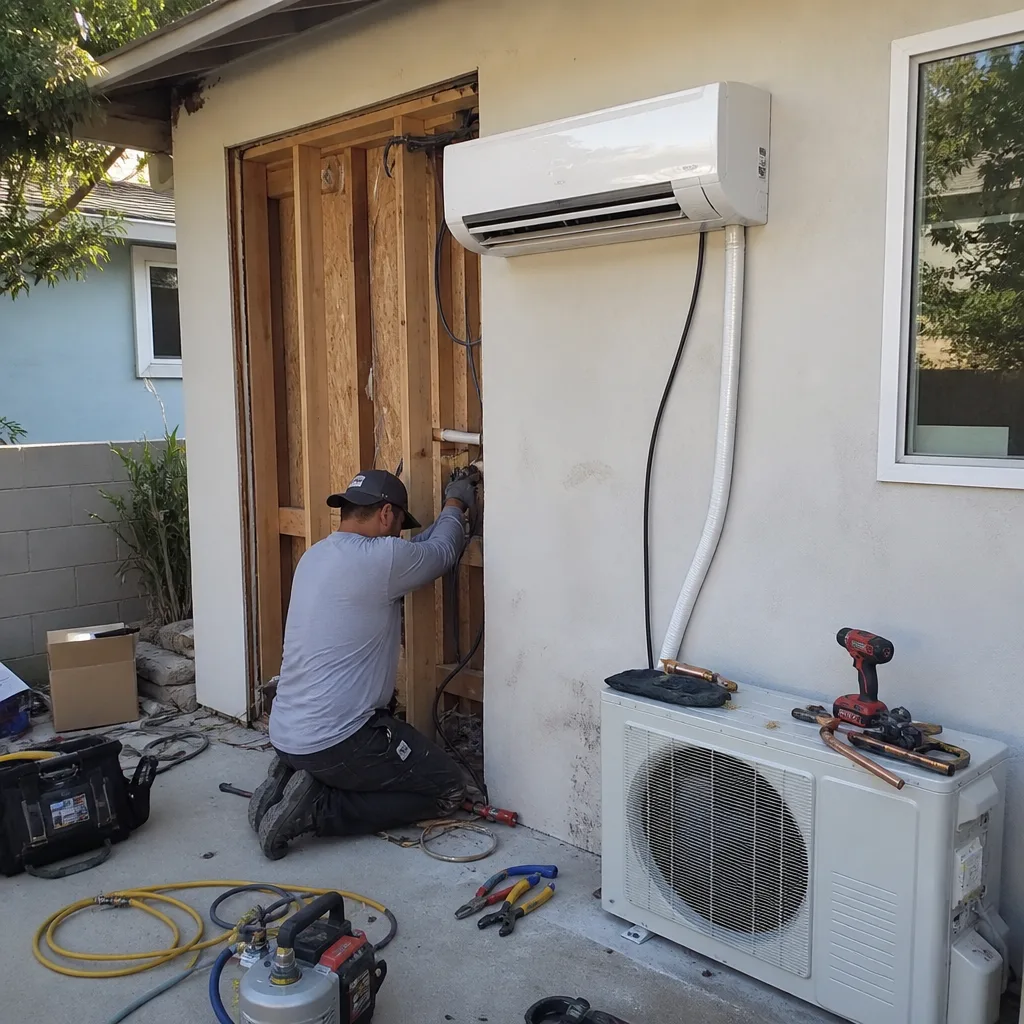
- Visible cracking at butt joints or field cuts. Fiber cement doesn’t flex. When the underlying garage framing shifts, which older Los Angeles slabs do, the siding cracks at the joint instead of absorbing the movement. This usually means the original installation skipped the proper gap at butt joints, or the flashing detail was wrong.
- Swelling or bubbling paint film, especially near grade. Hardie siding needs at least 6 inches of clearance from finished grade. Older garages in neighborhoods like Highland Park and West Adams were built with the slab nearly flush to the soil. When the siding sits too close to the ground, it wicks moisture, and the paint fails first.
- Soft spots behind the siding. If water has been getting past the weather-resistive barrier for a few wet seasons, the original garage framing rots behind the Hardie. The siding may look fine from the outside. We find this during demolition on roughly one in five Los Angeles garage conversions.
- Termite damage at the mudsill. Los Angeles has one of the most aggressive termite populations in California. A garage that sat for decades with no one checking the sill plate often has damage the siding is hiding. Hardie fiber cement doesn’t feed termites, but the wood framing behind it does.
- Rust streaks at fastener heads. Non-stainless nails or screws in a coastal-influenced Los Angeles microclimate will corrode and bleed through the paint. Older garages near the 405 corridor in Culver City and Mar Vista are prone to this because of marine air plus poor original fastener selection.
Replacement Cost & What’s Included
For a typical 400-square-foot detached garage conversion in Los Angeles, a full James Hardie cladding and trim package runs $18,000-$42,000 installed. That includes demolition of the existing siding down to framing, repair or replacement of rotted framing members as needed, new weather-resistive barrier, new flashing at all penetrations and transitions, HardiePlank or HardiePanel installation to the specified fire-rated assembly, HardieTrim at corners and openings, and paint. The spread comes from the condition of the existing framing, whether you’re keeping the original garage door opening as a wall or converting it to glazing, and which Hardie product line the permit set specifies.
Every project we take is quoted with a written price before any work begins, per Haven Standard Clause 1. The line items for cladding, framing repair, and paint are shown individually. If the existing slab is 4 inches thick, within range for a conversion, that’s a line item we discuss before you sign, not a surprise after demo.
We do not do change orders. Under Clause 5 (No Surprises), the scope is locked at signing.
DIY or Call Us?
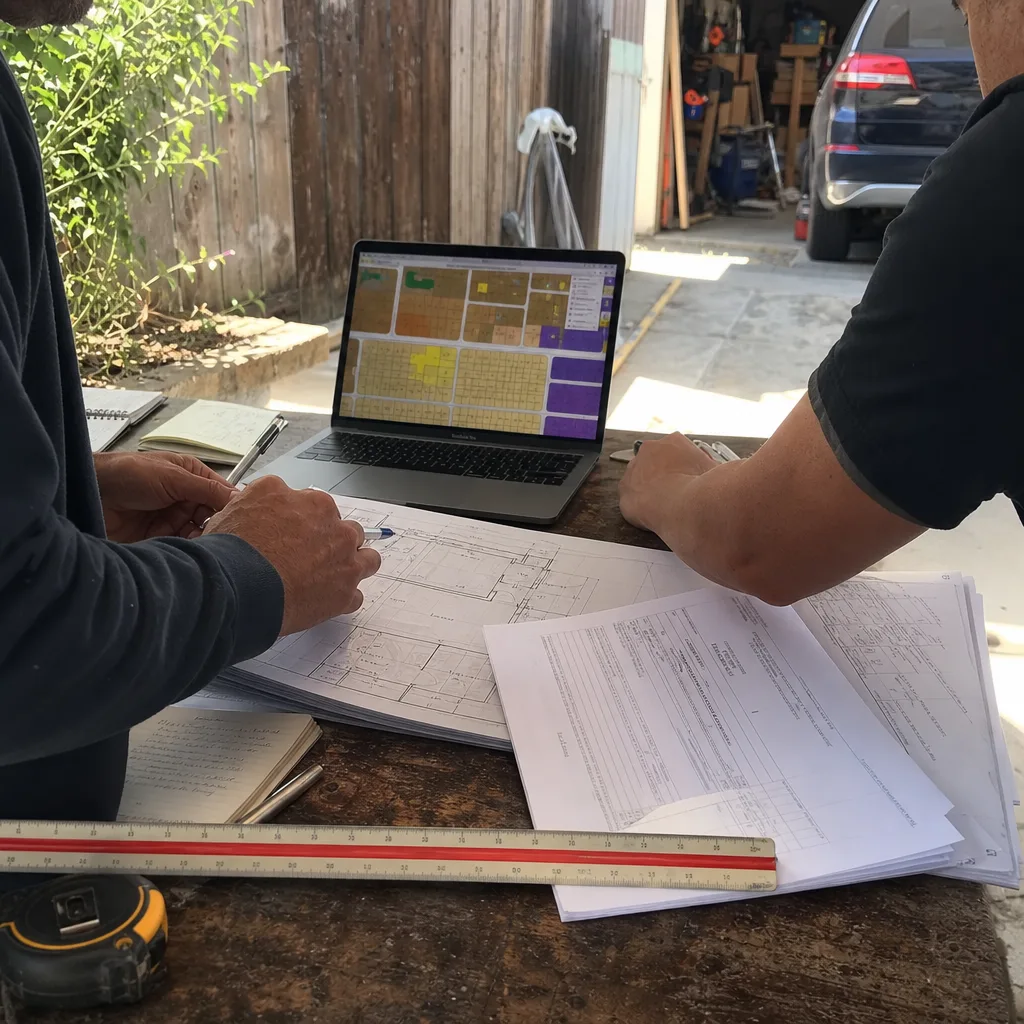
Cutting and installing fiber cement siding is not a high-tension spring or a live electrical panel, but it’s also not a weekend project for an owner with a miter saw and good intentions. The silica dust from cutting HardiePlank requires a proper respirator and dust collection. The fastening pattern, joint gap, and flashing details are exactly where DIY installations fail in Los Angeles, and those are the details an LADBS inspector checks on a garage conversion final.
What an owner can safely do: check the clearance between the bottom of the siding and grade, look for rust at fastener heads, and feel for soft spots at the base of the walls. If you find any of those, the next step is documentation and a written scope, not a patch job. Call (971) 497-2402 and we’ll schedule a site visit. We provide a documented photo record on every visit so you see what we saw.
FAQs
James Hardie fiber cement carries a 30-year limited product warranty, and in Los Angeles’ dry climate, properly installed HardiePlank and HardieTrim typically last 30-40 years before cosmetic failure like paint delamination. What fails sooner is usually the paint film and the caulk at joints, which need maintenance every 10-15 years. Call (971) 497-2402 if you’re seeing joint cracks or bubbling paint near grade; we’ll tell you whether it’s a maintenance item or an installation defect.
Individual cracked boards can be replaced, and we do this for owners who aren’t converting the garage into a living space. For a conversion project going through LADBS permitting, we usually recommend full cladding replacement because the fire-rated assembly documentation depends on the wall layers being consistent and verifiable. The answer varies by condition. Call (971) 497-2402 for a site evaluation and a written opinion.
For a typical detached two-car garage in Los Angeles, the cladding and trim installation takes 3 to 5 working days after framing repair and weather-resistive barrier are complete. Paint adds 2 to 3 days depending on the crew and weather. The full garage conversion, from demolition through final inspection, runs 12 to 16 weeks in Los Angeles permitting timelines.
We stock Hardie flashing, joint flashing, color-matched sealant, and touch-up kits on our trucks for field corrections during installation. Full siding and trim packages are ordered per project to match the permit set specifications and the color schedule. We maintain standing relationships with Southern California Hardie distributors, so material lead times are typically 5 to 10 business days.
If you have an existing written estimate for a garage conversion and want a second set of eyes on the cladding line items, we offer a Free Second Opinion. Call (971) 497-2402. A live person answers.
Written by Nadia Ellery, Principal, Ellery ADU Studio at Ellery ADU Studio, serving Los Angeles and nearby areas.