
James Hardie New Detached ADU: The Los Angeles Owner’s Guide
We specify and install James Hardie siding, trim, and panel systems on new detached ADUs across Los Angeles, and the installed cost for a complete Hardie exterior on a typical 600-900 sq ft ADU runs $22,000-$38,000, materials and labor included. That number covers HardiePlank lap siding, HardieTrim boards, soffit, flashing, and all fasteners and sealants. Most Los Angeles homeowners discover a Hardie-related failure the same way: a hairline crack at a butt joint, swollen edges near the bottom course, or paint peeling in a pattern that suggests moisture is getting behind the board. The failure usually starts at a seam that was never flashed correctly, not in the board itself.
If you already have a James Hardie product on an existing structure and a section is failing, this page explains what fails, what it costs to fix, and how we handle the replacement under our single-contract design-build model. We’re an independent design-build studio, not affiliated with James Hardie, and we use their materials because they hold up in Southern California’s sun and dry-rot conditions better than most alternatives.
Which James Hardie Models This Applies To
James Hardie makes several exterior products, and the failure pattern differs by product line. HardiePlank lap siding is the most common on Los Angeles ADUs, in 5/4 in. and 7/16 in. thicknesses, with exposure widths from 4 in. to 7 in. depending on the look. HardiePanel vertical siding comes in 4×8, 4×9, and 4×10 sheets, and it fails differently than lap siding: panel delamination at grade or at the roofline where clearance was too tight. HardieTrim boards (smooth, 5/4 and 4/4 thickness) are the most frequent failure point we see, because they catch more water than lap boards and installers often bed them in caulk that fails within three to five Los Angeles summers.
The important compatibility check: James Hardie products are not interchangeable with generic fiber-cement from other manufacturers. Fastener schedules, required clearances, and joint treatment are product-specific. If you’re matching a repair, the color line matters too: Hardie’s ColorPlus factory finish (approximately 15 years of coverage) versus site-painted primed board (you repaint every 7-10 years in LA sun). We can identify what’s on your wall from a few photos and a measurement, and we’ll tell you whether you’re matching OEM to existing or whether an aftermarket equivalent makes sense. For ADU work, we specify OEM Hardie products specifically, because the warranty tracking is cleaner when the entire envelope is one manufacturer.
Signs Your James Hardie New Detached ADU Is Failing
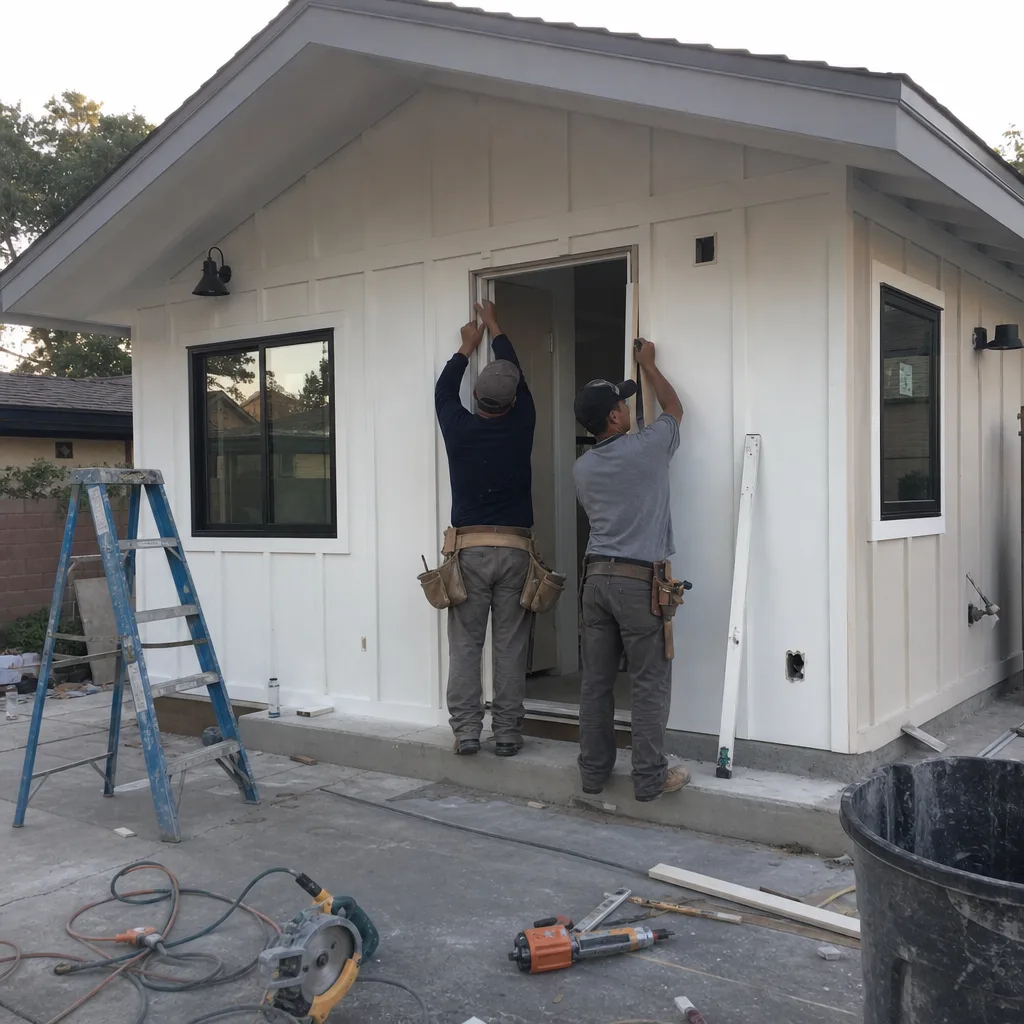
- Swelling or buckling at the bottom course. This means the siding is sitting too close to grade or a hardscape surface. Hardie requires a 6 in. clearance from earth and 2 in. from rooflines, walkways, and decks. In Los Angeles, we regularly see bottom courses buried in planter beds by well-meaning homeowners.
- Hairline cracks radiating from a fastener. When HardiePlank is face-nailed too close to the edge or driven too deep, the board fractures under thermal expansion. Los Angeles swings from 50°F nights to 100°F-plus summer days, and that movement is enough to make a bad fastener pattern show within two years.
- Paint peeling in one isolated area only, with the board soft behind it. This is trapped moisture, nearly always at a butt joint or a window head that wasn’t flashed or caulked correctly. If the board is soft, it’s failing. Surface peeling with a hard board behind it is a coating issue, not a product failure.
- Gaps opening at butt joints. Hardie specifies a 1/8 in. gap with caulk at butt joints, not tight-butted boards. When installers fit them tight, thermal movement opens the joint and water gets a channel behind the siding. We see this on ADUs built by crews that treated fiber-cement like wood.
- Mold or mildew streaks on HardieTrim around windows and corners. Trim boards wick water end-grain, and any cut edge that wasn’t sealed before installation will take on moisture. Once the trim is saturated, it holds water against the structure, and the rot moves inward even though the trim board itself is rot-resistant.
Replacement Cost & What’s Included
For a repair, not a full re-side, Los Angeles pricing on James Hardie replacement work runs $850-$2,400 to remove and replace a few failed boards, reseal adjacent joints, and repaint the affected section to match. If the failure requires replacing a full elevation or addressing a flashing defect behind the siding, you’re looking at $4,000-$9,000 for a single ADU wall, and $22,000-$38,000 for a complete new Hardie exterior on a typical detached ADU in Los Angeles. The price is written before any work starts, per Haven Standard Clause 1, and it includes materials, labor, sealant, flashing correction, and a documented photo record of everything we open up and close back.
The variables that move your number: how many courses have to come off, what we find behind the siding (rot in the sheathing, missing housewrap, bad window flashing all add to the repair scope), and whether you’re matching a ColorPlus factory finish or we’re repainting primed board to blend. Our workmanship warranty covers the repair. The Hardie product warranty stays between you and James Hardie, but we document the installation so a future warranty claim is easy to make, not a phone tree project.
DIY or Call Us?
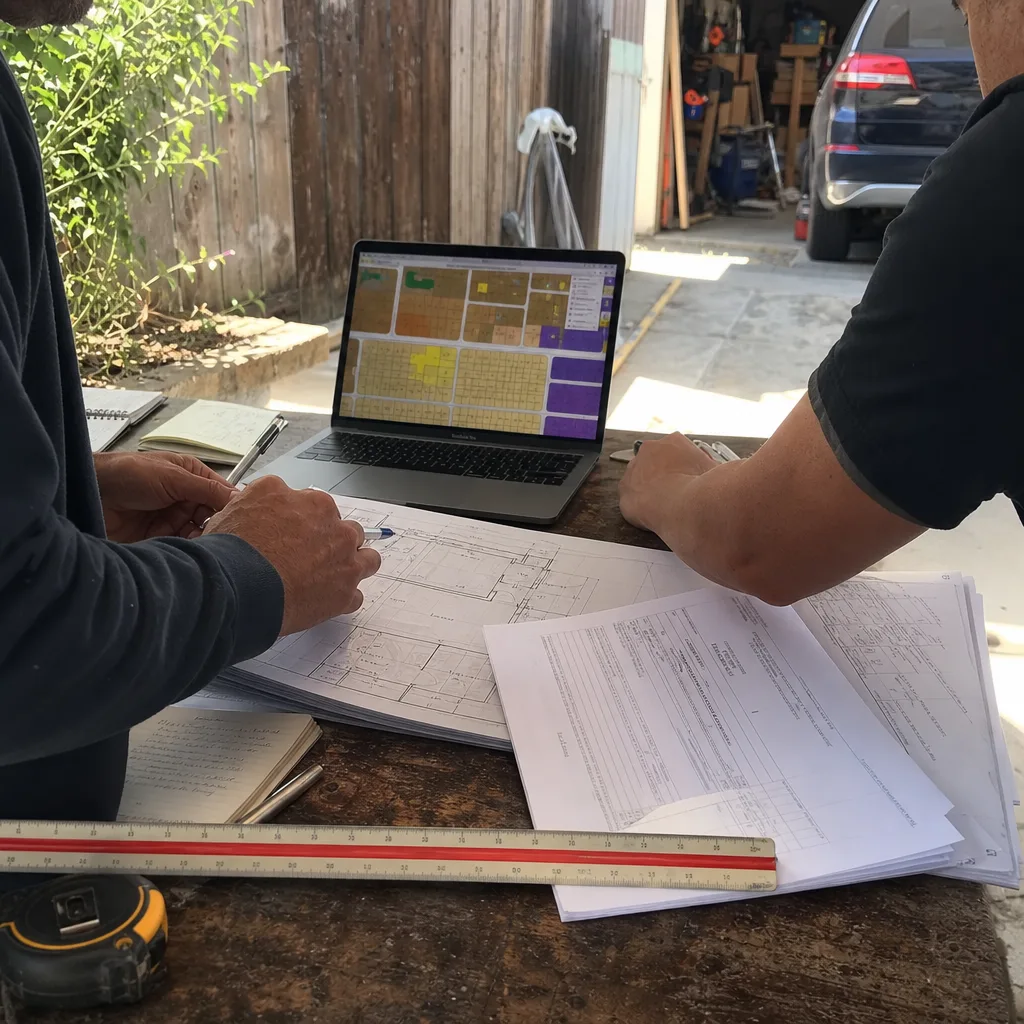
Replacing a single James Hardie board is not technically dangerous like a garage spring, but it is one of those jobs where the first-time learning curve costs more than the labor would have. You need a fiber-cement blade (or shears), the correct fastener schedule for that board’s thickness, and the discipline to seal every cut edge before it goes up. Miss the edge seal and the new board starts absorbing water from day one. Get the flashing detail wrong at a butt joint and you’ve recreated the original failure.
What you can safely do yourself: photograph the damage, measure the board exposure, and keep water away from the area until it’s fixed. What we regularly see go wrong with DIY Hardie repairs: boards tight-butted instead of 1/8 in. gapped, face nails in the wrong location, and caulk used as a substitute for proper flashing. If you’d rather have it matched, flashed, and sealed correctly the first time, call (971) 497-2402 and we’ll give you a written price before any work starts.
FAQs
Hardie’s product warranty runs 30 years on the board itself, but in Los Angeles the weak points are the sealants and paint, which typically need attention every 7-10 years in direct sun. A properly flashed and installed Hardie exterior on an ADU should still be structurally sound at 30 years if the joint treatment is maintained. Call (971) 497-2402 if you want us to walk your walls and tell you what’s aging and what’s failing.
A hairline crack can sometimes be routed and sealed if the board is otherwise sound and the crack isn’t at a water-entry point, but swollen, soft, or delaminated board needs replacement, full stop. In our experience, repairs near grade or windows rarely buy more than a year or two before the underlying moisture problem reappears. We’ll quote you the repair and the replacement at the same visit so you can decide with real numbers.
A small repair of two to four boards takes one day, including sealant cure time for the joints. A full elevation replacement runs two to three days. A complete new Hardie exterior on a detached ADU, including trim and paint, runs seven to ten working days. We’ll give you the schedule in writing along with the price.
We keep common hard-to-match trim profiles and a limited inventory of HardiePlank in standard exposures in our Los Angeles shop, so small repairs often go same-week. Specialty colors and panel sizes are ordered per job, typically three to five business days out. We also coordinate prefab and modular systems from Abodu, Cover, and Dvele within the same single contract, so if your ADU is a panelized build, the envelope fix happens under the same scope.
Written by Nadia Ellery, Principal, Ellery ADU Studio at Ellery ADU Studio, serving Los Angeles and nearby areas.