
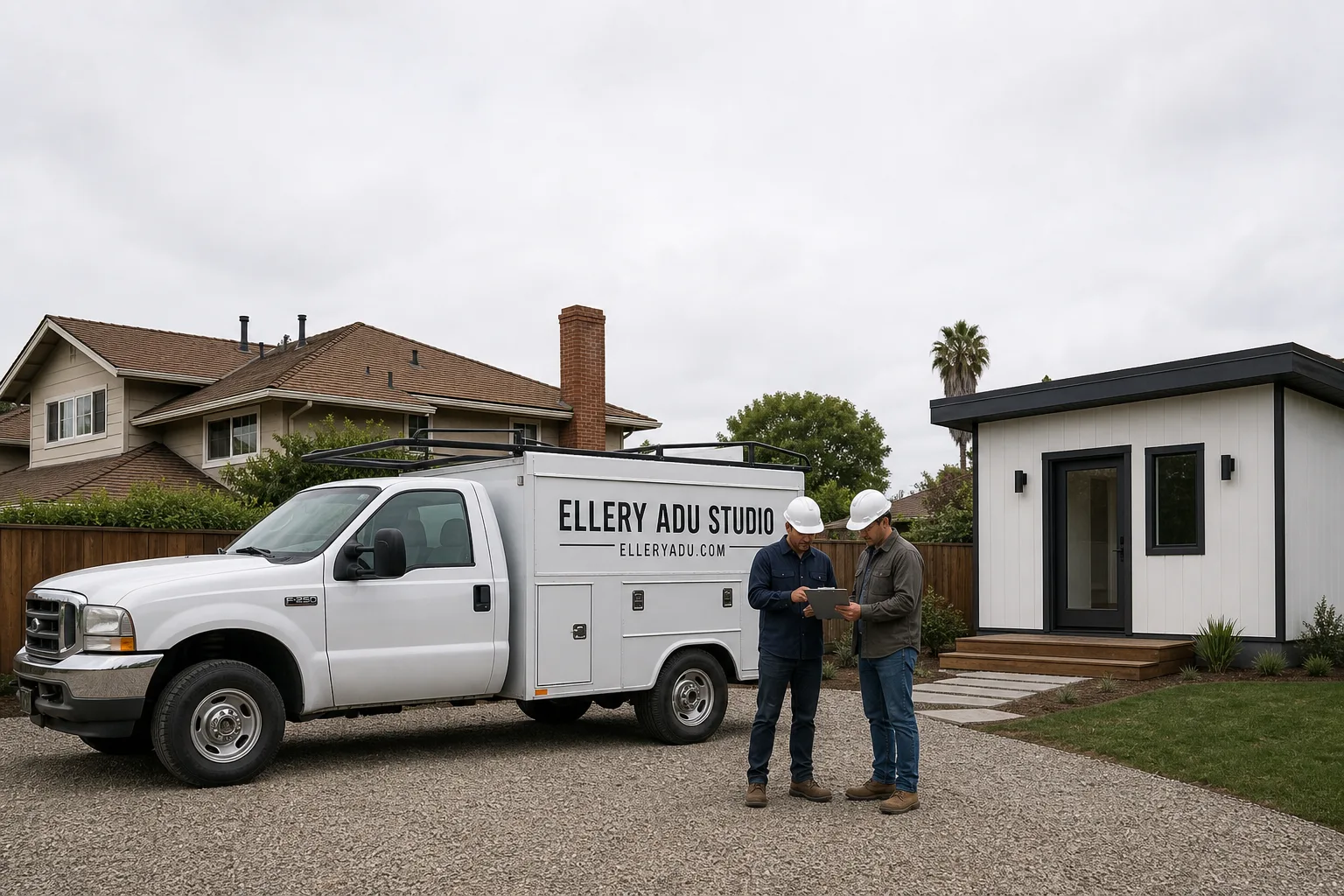
New Detached ADU “Stopped Working” – What That Symptom Usually Means
When a new detached ADU stops working, the cause is almost always one of four things: a utility connection that was never properly commissioned, a permit that closed before final inspections were signed off, a mechanical system that was installed but not calibrated, or a structural finish item that failed within the first year. All four are fixable. None of them are the homeowner’s fault.
The phrase “stopped working” covers a lot of ground. The lights went out. The heat won’t come on. The door won’t lock. The bathroom drain is backing up. Whatever the specific failure, the pattern is consistent across the 900-plus ADUs Ellery ADU Studio has designed, permitted, and built since 2015: new detached ADUs that develop problems in the first twelve months almost always trace back to a commissioning gap – something that was installed correctly on paper but never tested under real load conditions, or a finish item that was signed off at punch list but hadn’t yet cycled through a season.
The section below is designed to help you identify which category your problem falls into before anyone arrives.
Why It Happens
1. Utility Connections That Were Not Fully Commissioned
The most common cause of a new ADU “going dark” is a utility connection – electrical, gas, or water – that passed rough inspection but was never tested under actual occupancy load. You’ll recognize this pattern if the problem appeared within the first few weeks of someone moving in, if it affects the whole unit rather than one room, or if tripping a breaker or resetting a GFCI outlet temporarily restores function. Electrical panels in detached ADUs are separate sub-panels fed from the main house or a dedicated service run; if that connection was undersized or the grounding was not completed to the local utility’s final specification, the symptom is usually a dead unit or a breaker that won’t hold.
2. Mechanical Systems Installed But Not Calibrated
Mini-split heat pumps, tankless water heaters, and ERV ventilation units are standard in detached ADUs because they fit the square footage. Each one requires a commissioning step after installation – a refrigerant charge check, a water heater temperature and pressure test, a ventilation airflow reading. If those steps were skipped or performed without documentation, the system may have worked on day one and degraded over the first season. The sign is a system that heats or cools inconsistently, produces no hot water past a certain flow rate, or cycles on and off without reaching set temperature.
3. A Permit That Closed Before Final Inspections Were Signed
In a small number of cases – and Ellery has reviewed estimates from other builders where this happened – the permit was “finaled” by the jurisdiction before every trade inspection was actually signed off. This is more common than it sounds, particularly in high-volume permitting queues. If your ADU was built by someone other than Ellery and you’re now seeing failures in plumbing, electrical, or structural work, request a copy of the permit card and the inspection sign-off sheet from your local building department. Missing signatures on the card are a documented record of what wasn’t inspected.
4. Structural Finish Items That Failed in the First Year
Weather barriers, window flashing, and roofline terminations are the finish items most likely to show failure in year one because they require at least one rain cycle to reveal installation gaps. Water intrusion at a window corner, a door threshold that leaks in a windblown rain, or a soffit that shows staining after the first wet season – these are installation defects, not material defects. You’ll see them as water marks on interior walls or ceiling near penetrations, soft spots in floor sheathing near the entry, or efflorescence on a concrete slab foundation edge.
What to Do Right Now
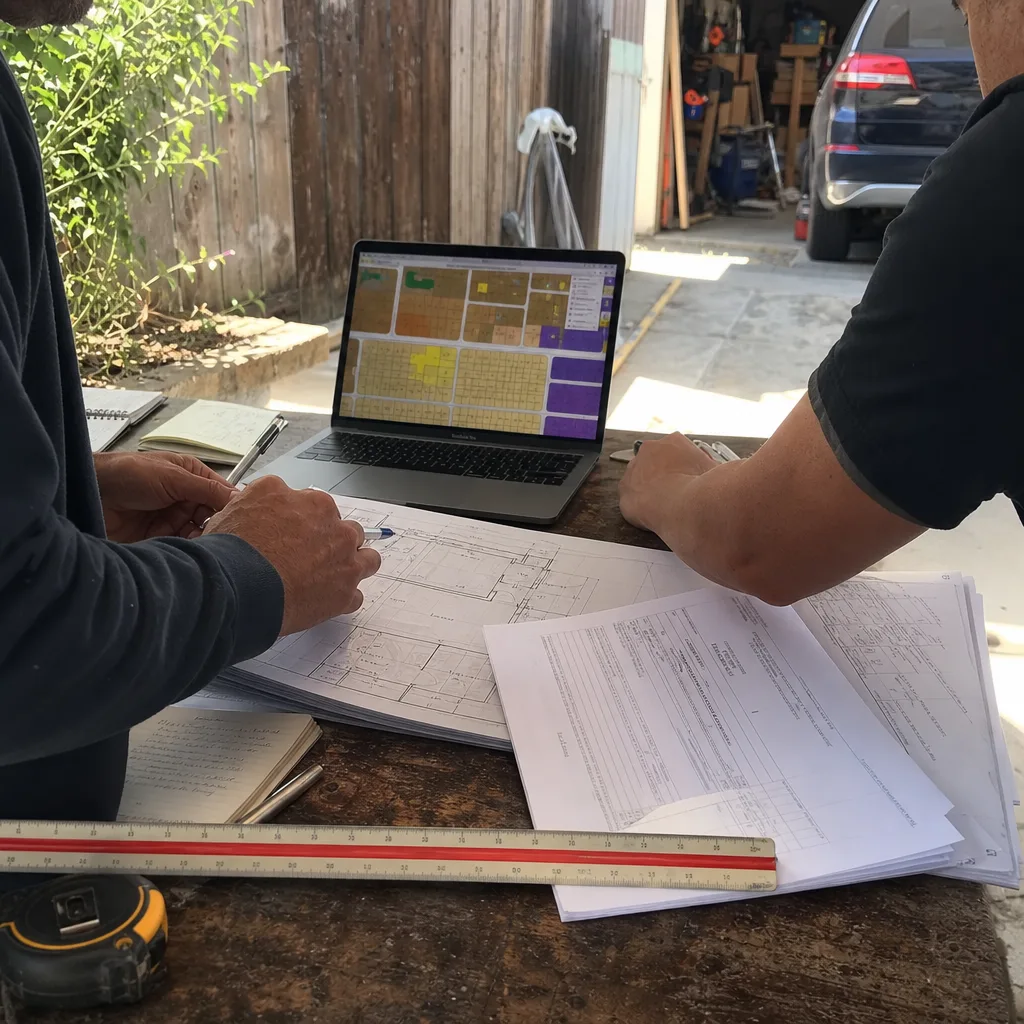
- Stop using the affected system and document what you see. Take photos before you touch anything. If it’s an electrical failure, photograph the panel, the breaker positions, and any visible outlets. If it’s water intrusion, photograph the stain and measure from the nearest window or penetration. The photo record you create right now is evidence – treat it that way.
- Do not reset a tripped main breaker more than once. A main breaker that trips and won’t hold is telling you something about load or a fault condition. Resetting it repeatedly without knowing why it tripped is not safe. Turn off the sub-panel main, leave it off, and call for an assessment.
- Do not attempt to relight a gas appliance if you smell gas. Leave the ADU, leave the door open, do not operate any switches, and call your gas utility’s emergency line first. This is not a repair call – it is an emergency call to the utility, not to a contractor.
- Locate your permit card and your inspection sign-off record. If you built with Ellery, your project file includes a documented photo record and a copy of every inspection sign-off. If you built with someone else, ask them for the same documentation. The permit card is a public record and your building department can give you a copy.
- Check your written contract for a workmanship warranty clause. If you’re inside the warranty window, note the date and the exact symptom in writing before you call anyone. The date matters.
How We Fix It
When your local Ellery ADU Studio team arrives, the first step is a systematic walk of the unit with documentation – photos and readings of what they actually find, not a summary of impressions. That is how every Ellery visit works, under the Haven Standard.
For utility and mechanical failures, the technician will check the panel, the sub-panel feed, the mechanical system’s commissioning data, and the utility connection at the meter or point of entry. For structural finish failures, they will trace the water path from the interior stain back to the exterior penetration.
Before any repair work starts, you receive a written price. Not a range, not an estimate subject to change – a written scope and a written number, per Haven Standard Clause 1. The relevant services for a new detached ADU failure are New Detached ADU work and, where utility connections need to be re-run or upgraded, ADU Site Prep and Utilities. If your ADU was built by Ellery and the failure falls within the 365-Day Done Right Promise, that is addressed in writing before the repair schedule is set. Most diagnostic visits and straightforward repairs on a single-trade failure are completed in one visit.
Frequently Asked Questions
It depends on the system. An electrical fault that trips a main breaker and won’t hold, any smell of gas, or visible water intrusion near an electrical panel should not wait – stop using the affected system and call (971) 497-2402 now. A failed mini-split in mild weather or a slow drain that isn’t backing up can wait a day or two for a scheduled visit, but document the symptom today with photos and a written note of the date.
A live person answers at (971) 497-2402 around the clock, and your local Ellery team will give you an honest answer about availability when you call – not a callback promise that doesn’t materialize. For situations that involve an active electrical fault or water intrusion near structural elements, call now and tell them exactly what you’re seeing. For non-urgent mechanical failures, you’ll get a scheduled window, a named technician, and a text when they’re on the way.
Yes. Ellery offers a free second opinion on any written estimate already in hand, and your local team can assess an ADU built by any contractor. You’ll receive a written scope and a written price before any work begins – the same process applies regardless of who built the unit originally. Bring whatever documentation you have from the original build; the more the team can see, the more accurate the written price will be.
Not without your written approval first. Every Ellery project is governed by Haven Standard Clause 1: a written price before any work starts. If a technician opens a wall and finds something that changes the scope, they stop, document what they found with photos, and give you a revised written price before continuing. There are no verbal change orders and no surprises added to the final invoice.
Get It Fixed
Call (971) 497-2402 – a live person picks up, around the clock. Describe what you’re seeing and your local Ellery ADU Studio team will schedule a documented visit, give you a written price before any work starts, and back the repair with the 365-Day Done Right Promise.
Written by Nadia Ellery, Principal at Ellery ADU Studio, serving homeowners nationwide since 2015.
What Our Customers Say
"They walked us through setbacks and utility capacity before we paid anything, and told us one of our two options was not going to get approved."
- Mireille T."Every allowance was itemised at the start, so the finish selections did not turn into a surprise at the end."
- Benedict H."Handled the whole planning process. We went to one hearing and that was it."
- Rowena C.